

Andy Warhol: the artist who made us look again at the everyday
Soup cans, Marilyn and a $195 million record: how Warhol made us look again at the things we pass every day
The twenty-ninth article of our series “Great artists” starts on a supermarket shelf and ends in a New York saleroom, where a portrait of Marilyn Monroe made Warhol the most expensive American artist at auction.
Who was Andy Warhol before he became famous?
Andy Warhol was an American artist, born Andrew Warhola in Pittsburgh, Pennsylvania, in 1928, who worked as a commercial illustrator in New York before becoming the best-known figure of Pop Art. His parents came from a Rusyn family from the region that is now northeastern Slovakia. He studied commercial art at the Carnegie Institute of Technology before moving to New York in 1949.
There he built a successful career as a commercial illustrator. His work appeared in magazines and advertising, and he became known for a distinctive blotted-line technique. Long before he became a celebrity artist, he understood how an image could attract attention, communicate quickly and circulate widely.
That background matters. Warhol did not arrive in the art world from a place untouched by commerce. He knew the machinery of magazines, brands and visual fashion from the inside. Later, he brought that knowledge into paintings, prints, films and projects that complicated the distinction between commercial culture and fine art.
In the early 1960s he began making works associated with what became known as Pop Art. Rather than looking only to classical mythology or heroic history for subjects, he turned to objects and faces that Americans encountered in daily life. A celebrity portrait and a product label could both carry powerful cultural meaning.
Warhol died in New York in 1987. By then, he had become a public figure whose appearance and carefully managed persona were almost as recognizable as many of the images he created.
Why did soup cans and Marilyn Monroe become art?
Soup cans and Marilyn Monroe became art when Warhol took the most familiar product and the most familiar face of his day and painted them as serial images: his Campbell's Soup Cans debuted as a series of 32 canvases in 1962. Each represented a different flavor. The subject was ordinary, but presenting the cans as individual paintings invited viewers to look at them in a new setting. The serial arrangement also echoed the way products are displayed and consumed.
The question was not only whether a soup can could be painted. It was what happened when a familiar commercial image entered a gallery and began to carry the expectations we attach to art.
Warhol's Marilyn Monroe images came from a publicity photograph of the actress. After her death in 1962, he returned to her face in a range of colors and formats. The image is seductive and instantly recognizable, but its repetition can also make us think about how celebrity turns a person into an endlessly reproduced public object.
His use of silkscreen helped him repeat photographic images while allowing variations between impressions and surfaces. The process connected his art to mechanical reproduction without making every work identical. Color, registration, the application of ink and the condition of an individual object still matter.
The same artist also made the Death and Disaster works. Their images of accidents, violence and death make it harder to treat Warhol as merely a cheerful decorator of consumer culture. Repetition can make an image familiar; it can also expose how easily we become accustomed to seeing tragedy.
What was the Factory, and what happened there?
The Factory was the name associated with Warhol's New York studio and the changing circle of artists, performers, filmmakers, musicians and visitors around him. It was a place of work and a social world, with different locations over time rather than one permanent room.
Warhol made films including Sleep, Empire and Chelsea Girls. He also worked on the multimedia project The Exploding Plastic Inevitable, which featured the Velvet Underground. The Factory helped create an environment in which art, music, cinema and celebrity could meet, overlap and sometimes collide.
It is tempting to imagine Warhol producing everything alone, but his career also raises questions about collaboration, assistants and authorship. When a studio contributes to the making of work, where exactly does the artist's idea end and the collective process begin? Warhol made that question visible rather than hiding it.
On June 3, 1968, writer Valerie Solanas shot Warhol at his studio. He survived, but the attack was a major event in his life and the history of the Factory. The Andy Warhol Museum documents the shooting as well as the wider work and community around the studio.
Warhol later co-founded Interview magazine and continued to move between art, publishing, portraiture and public life. The media world he observed had become a world in which he was also a participant.
Was Warhol praising consumer culture or criticizing it?
Warhol was doing both, and neither reading explains everything. The images are attractive and seductive. They also ask us to notice how brands, mass production and fame shape our attention.
A repeated soup can can look democratic: many people recognize it, regardless of their art education. A repeated face can suggest celebrity as a product. But the same works entered a market in which unique paintings and rare editions became highly prized. Warhol's art does not sit outside that contradiction. It puts the contradiction in front of us.
There is another distinction that matters to collectors. A unique painting, an authorized screenprint from a documented edition, a poster and a reproduction are not interchangeable just because they show the same image. Their histories, materials, signatures, editions and documentation can be different.
This is especially relevant with an artist whose imagery has circulated so widely. Recognition of an image is only the beginning of understanding an individual object. The next questions are what it is, when it was made and what evidence accompanies it.
What is Andy Warhol's auction record?
Warhol's auction record is $195 million for Shot Sage Blue Marilyn (1964), sold at Christie's New York on 9 May 2022: $170 million at the hammer, $195,040,000 including the buyer's premium. It is the highest price ever paid at auction for a work by an American artist. The painting came from the collection of the Swiss dealers Thomas and Doris Ammann, and the buyer was later reported to be the dealer Larry Gagosian.
This month brought two more. On 16 November 2026, at Sotheby's The Now and Contemporary Evening auction in New York, Flowers (1964) sold for $15.2 million at the hammer, $18.2 million with fees, just above its high estimate, The Art Newspaper reported. Three days later, on 19 November, at Christie's 21st Century Evening Sale in New York, the hand-painted Campbell's Soup Can (Turkey Noodle) (1962), from the Sonnabend collection, sold for $7.3 million, $9 million with fees, against an estimate of $6 million to $8 million.
These are sales of three different works. The record for a Marilyn painting should not be treated as a price for a print bearing a similar image, and the result for one Flowers painting does not tell us the result of another. Auction figures are facts about particular objects and particular transactions.
What are five facts worth remembering about Warhol?
1. He began in advertising. Warhol started his New York career as a commercial illustrator.
2. The soup cans are 32 paintings. The original Campbell's Soup Cans series comprises 32 painted canvases, one for each flavor.
3. He painted disasters too. His subjects included violence and death as well as products and stars.
4. He was shot in his own studio. Valerie Solanas shot him at the Factory on 3 June 1968; he survived.
5. The same image can be many objects. A unique painting, an editioned print and a reproduction are different objects.
Where can you see Warhol's works?
You can see Warhol's works at the Andy Warhol Museum in Pittsburgh, the museum devoted to his life and work, and at the Museum of Modern Art in New York, which holds the 32 Campbell's Soup Cans canvases. His art appears in many other museum collections. Check what is currently on view before visiting.
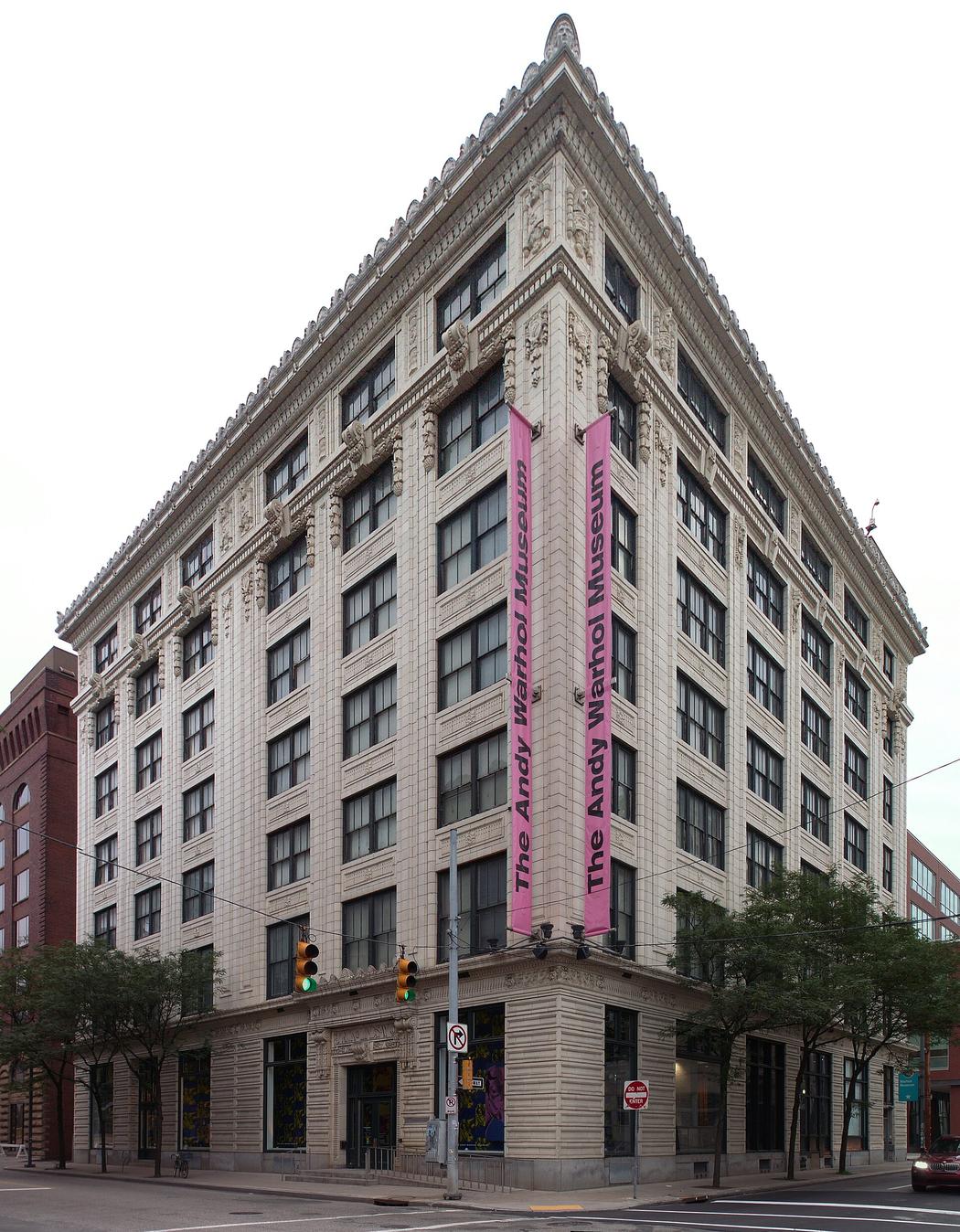
The Andy Warhol Museum, Pittsburgh covers his whole career, from the illustrations to the films.
The Museum of Modern Art, New York holds Campbell's Soup Cans (1962).
Why does an object's history matter?
An object's history matters most with an artist whose images have been copied millions of times: what makes one Warhol different from a poster of it is the record of what it is, who made it and who has owned it.
At CoArt Market, every object carries a cryptographic certificate of authenticity that records its path from owner to owner, and we are building a market for fractional ownership of Blue Chip art and collectibles, a core part of the system we are working on now.
Warhol knew that the images around us compete for our attention. He took some of the most familiar and placed them where we had to look again. Today, surrounded by more images than he could have imagined, which ones do we notice, and which ones have we stopped seeing?
Sources
- The Andy Warhol Museum, biography: www.warhol.org/andy-warhols-life/
- The Andy Warhol Museum, Time Capsule 21: Factory shooting: www.warhol.org/timecapsule/andy-warhols-time-capsule-21/time-capsule-21-factory-shooting/
- The Art Newspaper, Judd Tully, Warhol's Shot Sage Blue Marilyn sells for $195m at Christie's New York (10 May 2022): www.theartnewspaper.com/2022/05/10/warhols-blue-marilyn-195m-christies-new-york-ammann-collection
- Bloomberg, “Warhol Marilyn Sells for $195 Million, Most Ever for U.S. Artist” (10 May 2022): www.bloomberg.com/news/articles/2022-05-10/warhol-shot-sage-blue-marilyn-sells-for-195-million-most-ever-for-u-s-artist
- The Art Newspaper, Carlie Porterfield, “Yayoi Kusama sets $15m record as Sotheby's opens New York mega-sales” (16 November 2026): www.theartnewspaper.com/2026/11/16/yayoi-kusama-sets-15m-auction-record-as-sothebys-opens-new-york-mega-sales
- The Art Newspaper, Judd Tully, “Christie's tepid 21st-century sale caps week of blockbuster auctions in New York” (20 November 2026): www.theartnewspaper.com/2026/11/20/christies-new-york-november-auction-21st-century-art-gund-sonnabend-basquiat
- MoMA, Campbell's Soup Cans: www.moma.org/collection/works/79809