

Claude Monet: a grainstack, a garden and $110.7 million
A stack of grain near Giverny, the light that changed by the hour, and $110.7 million in New York
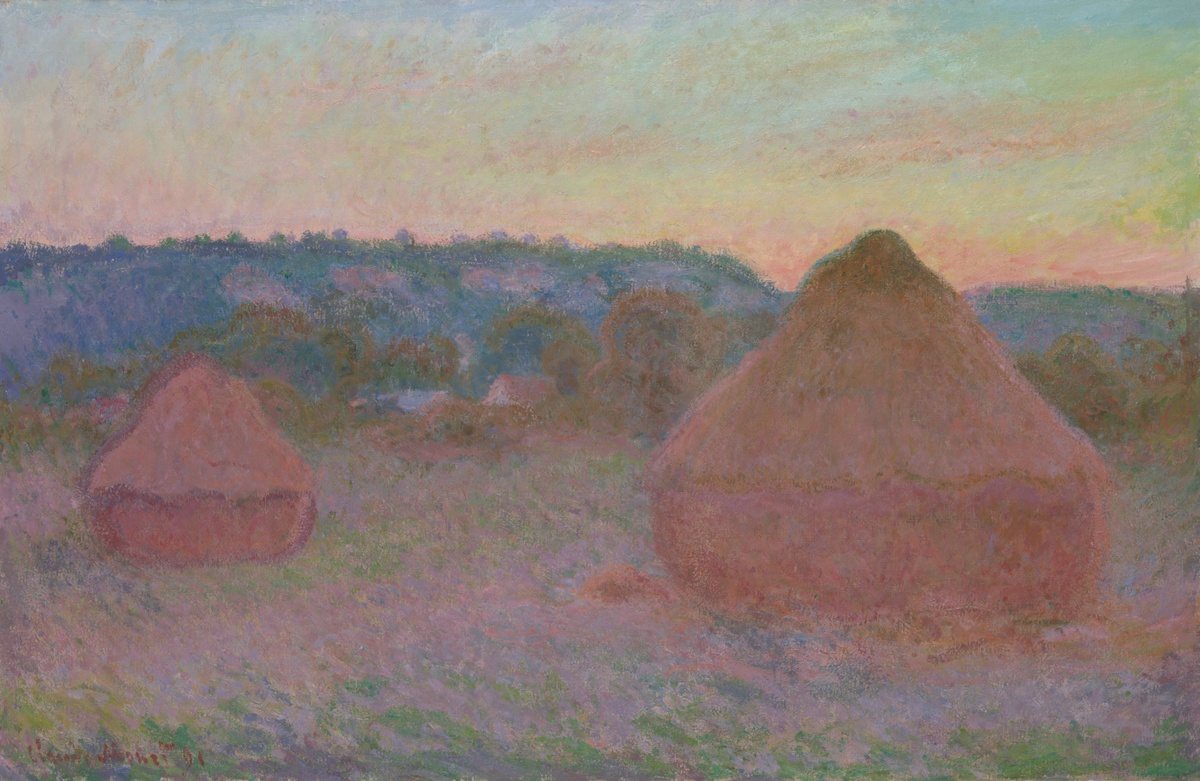
The fourth article of our series “Great artists” starts with a stack of grain in a field near Giverny. In 2019 that stack sold in New York for $110.7 million. The story of how it got there is almost as interesting as what Monet saw in it.
Who was Claude Monet?
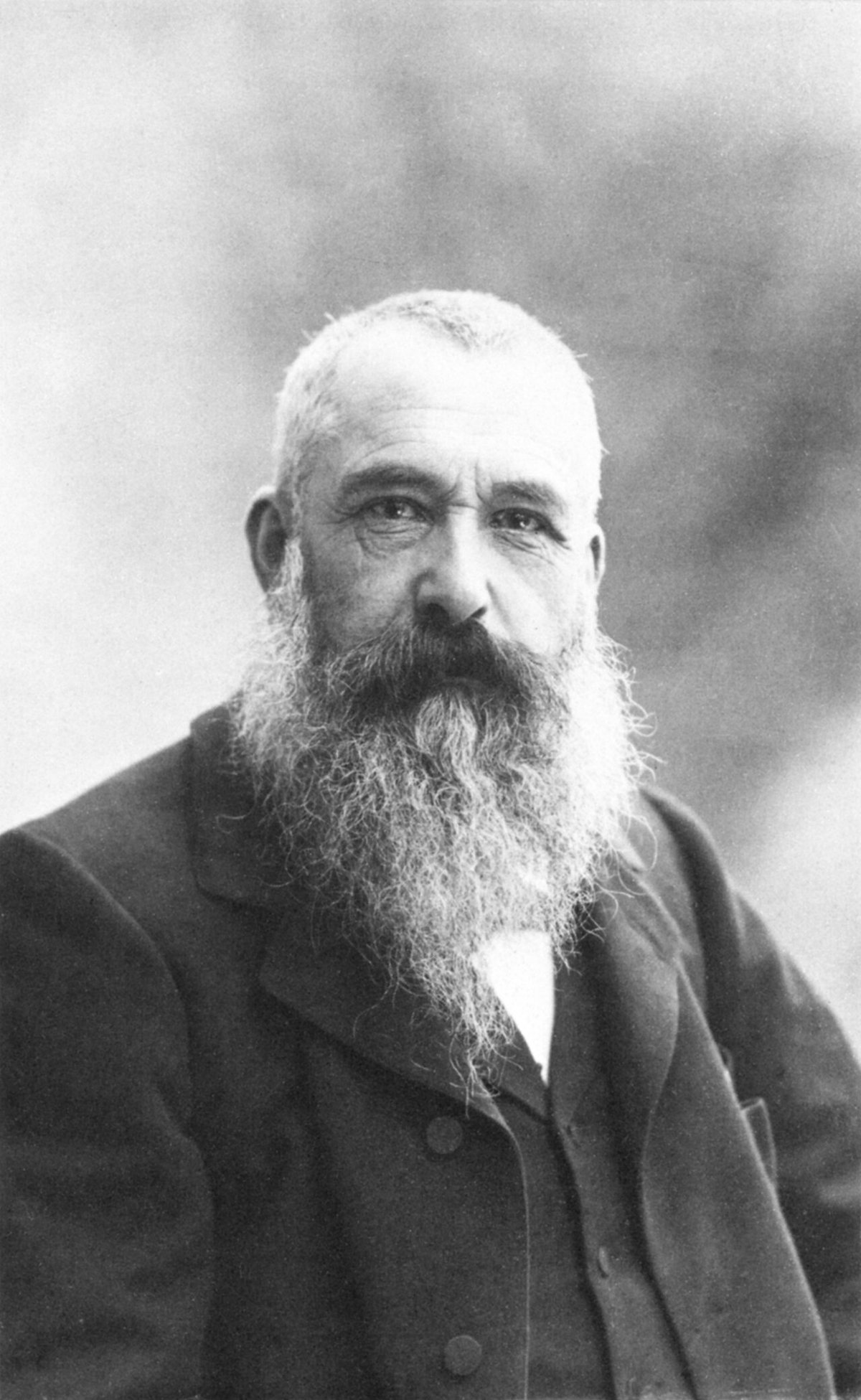
Claude Monet was a French painter and a founder of Impressionism, born in Paris in 1840 and raised largely in Le Havre. He spent his life looking at ordinary things with unusual patience: a river, a railway station, a cathedral, a pond, a field after harvest.
He was not looking for an excuse to make a catalogue of buildings and plants. He was watching what light did to them. The same subject at noon was different from the same subject in the evening. Add fog, change the season, wait for snow, and the painting had to begin again.
That sounds obvious today. A great many things look obvious after somebody has spent a lifetime making other people see them.
Monet died in 1926 at Giverny, where his house and garden had become both his home and his most durable source of material. By then he had known financial difficulty, criticism and success. The last of those did not stop him from working on the pond.
Why is Monet associated with Impressionism?
Monet gave Impressionism its name through Impression, Sunrise, a view of the port of Le Havre shown at the independent exhibition of 1874. A critic used its title to mock the painters. The label stayed; the mockery did not.
The group was looking for ways to exhibit outside the official Salon. Their pictures often showed contemporary life and landscape with visible brushwork and an interest in changing light. They were not a factory producing identical views. Monet, Renoir, Degas and their colleagues each had their own eye, and they did not always agree.
Look at Impression, Sunrise and you see boats, a low sun and a working harbor in mist. There is not much detail for someone hoping to count the windows. There is plenty for someone interested in what that particular morning felt like.
I like the commercial lesson hidden in the name. A word intended as an insult became the name of a movement recognized around the world. It is not a method I would recommend for naming a company, but it worked for them.
Why did Monet paint the same grainstacks again and again?
Monet painted his grainstack series to study how changing light, weather and seasons transformed a familiar subject near Giverny. The stacks held harvested grain; they were not monuments commissioned by the local aristocracy.
This is important. He did not have to go anywhere exotic. The subject stayed put while everything around it changed: snow melted, sunlight shifted, shadows lengthened. He could compare not just two objects but two moments.
The painting that later set his auction record belongs to this group. Its title, Meules, is often translated as Haystacks, although the stacks held grain. Sotheby's dates it to 1890. The composition places a large stack close to the viewer, another beyond it, and a landscape in color and light.
A painting of a stack sounds like a hard sell if you describe it badly. Monet solved that problem by painting it well.
What did Monet's Meules sell for?
Monet's Meules sold for $110,747,000 including fees at Sotheby's New York on 14 May 2019, setting his auction record. Six bidders competed for more than eight minutes, according to the auction house.
Before that, the same painting sold at Christie's New York in 1986 for about $2.5 million. Between those sales it stayed in a private collection. Earlier still, it had been acquired through Monet's dealer Paul Durand-Ruel for the collection of Bertha Palmer in Chicago.
Another Monet with a long private history returned to the market in 2026. Iris, from the Schlumberger collection, sold at Sotheby's Paris on 22 October for €50 million (about $56.2 million). It was the highest price ever paid for any work at auction in France, beating the €43.2 million paid for Amedeo Modigliani's Tête de cariatide at Christie's Paris in 2010, though not Monet's worldwide record. Records, like light, depend on where you stand.
Two different paintings, two different histories, and two public sales. Neither figure tells us what every Monet painting is worth. A title, a signature and a famous name are only the beginning of a proper comparison. Date, subject, condition, documented ownership and whether a painting has been available recently all matter too.
The numbers are spectacular. So is the quieter fact that a picture can spend decades in a home while its reputation travels much further than the painting itself.
What are five surprising facts about Monet's life and work?
Here are five details that make the familiar bearded man and his water lilies a little less predictable:
1. He began with caricatures. As a young man in Le Havre he made and sold caricatures before the landscape painter Eugène Boudin encouraged him to work outdoors.
2. A harbor gave a movement its name. The painting that helped name Impressionism showed the industrial port of Le Havre, not the garden most people associate with him.
3. He painted the same subject repeatedly. Grainstacks, Rouen Cathedral and poplars became opportunities to compare light rather than exercises in making copies.
4. He made his own subject. At Giverny he developed the water garden that supplied the motifs for the late Water Lilies paintings.
5. The garden became a room. His large water-lily decorations at the Musée de l'Orangerie surround the visitor in two oval rooms. Looking at a painting becomes something closer to standing inside one.
The last detail is the one I would keep. Monet did not simply find a landscape, paint it and move on. He lived with it, planted it and watched it change.
Where can you see Monet's paintings?
You can see major works by Monet in Paris, New York and Giverny, among many other places. A museum's collection and the works currently on view are not always the same thing, so check the institution's site before traveling.
Musée Marmottan Monet, Paris holds Impression, Sunrise and a major Monet collection.
Musée de l'Orangerie, Paris presents the large water-lily decorations in the rooms designed for them.
The Metropolitan Museum of Art, New York holds Bridge over a Pond of Water Lilies.
Museum of Modern Art, New York holds a large Water Lilies triptych.
Fondation Claude Monet, Giverny preserves Monet's house and gardens, the place behind so many of the paintings.
Why do Monet's paintings matter to today's art market?
Monet's paintings matter to the market because their visual power, place in art history, documented ownership and scarcity at the top end bring together museums, collectors and auction houses. A public record is the visible result of that larger story, not an explanation by itself.
The story of Meules also shows how much an object's history depends on people who keep records: the artist's dealer, the collector who bought it, the family who kept it, and the auction specialists who assembled its provenance. A famous name helps. It does not fill in every missing page.
At CoArt Market, I want that history to be easier to follow as objects leave private homes and enter the market. Each object receives a cryptographic certificate of authenticity that records its path from owner to owner on the platform. The idea is to make participation more accessible to people beginning to collect, experienced professionals and established collectors alike. A market is more interesting when more people can take part in it.
Monet looked at a grainstack and saw that it was never quite the same twice. Most of us would have walked past it on our way to something more important. Would you have stopped?
Sources
- Sotheby's, Monet's “Meules” Sells for $110.7 Million: www.sothebys.com/en/articles/monets-meules-sells-for-astonishing-110-7-million-a-new-artist-record
- Sotheby's, $110.7 Million Monet Shatters Auction Records: www.sothebys.com/en/videos/110-7-million-monet-shatters-auction-records
- HENI, The Painting That Set Monet's Auction Record: heni.com/news/article/claude-monet-meules-2019-05-14
- Surface, Monet's Iris Sells For $56.2 Million, Setting France's All-Time Auction Record, and Other News (26 October 2026): www.surfacemag.com/articles/monets-iris-sets-all-time-auction-record-in-france/
- Musée d'Orsay, Monet and Impressionism: www.musee-orsay.fr/en/artists/claude-monet-1086
- The Metropolitan Museum of Art, Bridge over a Pond of Water Lilies: www.metmuseum.org/art/collection/search/437127
- Museum of Modern Art, Water Lilies: www.moma.org/collection/works/80220
- Sotheby's, Claude Monet: Biography: www.sothebys.com/en/artists/claude-monet