

Dmitri Krasnopevtsev: somebody kept the broken pot
A broken vessel earns its place on the table, and a quiet still life acquires a documented route through collections
The ninety-eighth article of our series “Great artists” begins in the kitchen. In most kitchens a broken vessel has a short future. In Dmitri Krasnopevtsev’s studio a break could give an object a reason to stay. Look at the title Still Life with Broken Vessel and Parchment. The damage is one of the few things the title tells us. Somebody looking for a perfect vessel would have discarded the very feature the painter chose to record.
Who was Dmitri Krasnopevtsev?
Dmitri Krasnopevtsev was a painter and graphic artist known for spare still lifes in which vessels, shells, books and damaged objects acquire an unusually concentrated presence.
As a boy Krasnopevtsev drew, attended a local studio and visited Moscow’s Museum of New Western Art, where he encountered Impressionist and Post-Impressionist painting. That early enthusiasm makes his later palette especially interesting. It is easy to look at a subdued still life and assume the artist was simply indifferent to color. What if he had already seen how much a painter could do with a bright one and wanted to find out how quietly color could speak? Try following the changes along the broken lip of the vessel.
The objects can seem to have arrived after the activity of ordinary life has finished. A vessel is no longer busy holding something for us. A branch has been separated from its tree. Freed from their usual jobs, these things have to establish other relations on the painted surface.
That is my way into the work, rather than a claim about the artist's private intention. I would begin with what one object makes another do. Does the broken edge direct the eye toward a sheet? Does an opening make a neighboring surface feel more solid? A quiet arrangement can contain a surprising amount of argument.
What does the break reveal?
The break reveals interior space and gives the vessel an irregular boundary that an intact pot would conceal.
The inside of a pot, for one thing. An intact vessel asks you to infer the space it encloses. A missing piece can expose that space and give it an edge sharp enough to draw. Parchment offers another kind of surface, one we instinctively want to read. Put the two together and the imagination starts trying to restore a whole vessel and a whole message. Which restoration did you start first?
There is also a change in the kind of attention the object receives. In a household, the question might be whether it remains usable. On the table of a still life, the break can become a source of shape. Damage has altered the object without exhausting its capacity to be looked at.
I would resist supplying a tragic biography for every crack. We do not know which accident produced an unidentified fragment. The painting has given us the visible result, not an invitation to invent an owner who dropped it. The absence of that story leaves the arrangement freer to work.
A broken rim can direct the eye just as decisively as a carefully drawn line. It has the advantage of feeling contingent, something that happened rather than something designed. The painter then makes a very deliberate choice about where that contingency belongs. Accident in the object's life becomes decision in the composition.
This is one reason the subdued palette matters. A bright decorative pattern might demand attention before the damaged contour does. Here small differences have room to register. We begin looking at the relation between surfaces, openings and edges, and the old distinction between a valuable whole and a worthless fragment starts to feel less useful.
What did a collector pay for this painting?
The buyer paid for a particular 1986 panel with a documented history, not for a generic example of Krasnopevtsev's familiar objects.
Doyle records $70,350 for the 1986 painting at its New York auction on April 21, 2026. The catalog identifies oil on Masonite, 70.2 by 49.8 centimeters, and traces it through Eduard Nakhamkin Fine Arts in New York to a Los Angeles collection. Those details let us follow this particular panel. If you have another late still life in mind, begin by asking what its objects do to each other before you compare their prices.
The Doyle catalogue's size, medium and provenance give the painting an identity that survives a change of owner. A title can be translated differently; the relationship between the broken vessel and parchment still belongs to this panel. When the same artist returned to related subjects, those distinctions became even more important.
I find the gallery-to-private-collection route worth keeping beside the image. A painting may have been familiar in a home while remaining almost invisible to the wider public. Reappearance at auction changes the audience without requiring any change to the painting.
That is not automatically a rediscovery of a forgotten master. It is a specific object becoming available for inspection again. The modest formulation is often more interesting. We can ask what the new catalogue adds to its history, which earlier details it preserves and where the record still falls silent.
For someone comparing another late still life, the first useful question remains visual. Which objects are present, how large are they in relation to the support and what kind of space separates them? A price comparison becomes more informative after those distinctions have been made.
Why do paper, books and fragile objects recur in these still lifes?
They give Krasnopevtsev contrasting surfaces and forms through which to organize a concentrated encounter among ordinary things.
A book has a closed volume and the promise of readable pages. A loose sheet has flexibility and exposed edges. A shell offers an exterior that already suggests a life beyond the arrangement. We can notice those possibilities without assigning each object a permanent symbolic translation.
The Zimmerli catalogue records Still Life with Books from 1966 and Still Life with Three Pots from 1969, alongside earlier work. The titles let us compare his arrangements without pretending that every group is a variation of one definitive masterpiece. Their differences deserve time.
I would try describing one painting without using the words mysterious or timeless. Name where a surface turns, where a contour breaks and where an object touches another. Those observations make the attraction more precise. Mystery can survive the description; it does not need to replace it.
What are five facts about Dmitri Krasnopevtsev?
These five details connect the work with specific events, materials and collections.
1. Zimmerli dates his life to 1925–1995 and records Moscow as both birthplace and place of death.
2. He encountered Impressionist and Post-Impressionist painting at Moscow's Museum of New Western Art.
3. He studied scenography before his later graphics training.
4. His education was interrupted by military service in the Soviet Far East beginning in 1942.
5. Zimmerli holds both paintings and an early etching, Ruins, dated 1953.
What have Dmitri Krasnopevtsev's works sold for?
Art-market databases report a higher figure for Still Life with a Broken Seashell at Sotheby's London on March 5, 2026: £192,000, according to FindArtInfo.
On June 20, 2024, MacDougall’s sold Still Life with a Paper Dove for £51,393. Paper returns in a different role here. Fold it and the material itself supplies the bird. In the 1986 picture sold by Doyle, the parchment invites us to imagine something written. Two fragile sheets give the viewer entirely different jobs.
The Swiss journalist Eric A. Peschler collected the work of Moscow artists he knew. His Still Life with Tree and Jars by Krasnopevtsev, dated 1987, realized €63,900 in Bonhams' Paris sale of his collection, which closed on October 5, 2026. Another painting from the same collection, Still Life with Broken Vase, realized €53,740, according to Afisha.London’s sale report.
Peschler lived in Moscow from 1957 to 1961. His book Privat in Moskau appeared in 1966,. That gap is easy to miss when a catalog compresses a relationship into a single line. We know where the painting came from. What I would like to know is what Peschler saw in that bare branch when he chose it. If you could open his notebook at just one page, would you look for his first meeting with the painter or the day he took the picture home?
The Doyle and Peschler results above describe different 1980s paintings. They are useful together without forcing their totals into a single price per square centimeter. A branch, a vessel, a support and a provenance are not interchangeable units.
Where can you see Dmitri Krasnopevtsev's works?
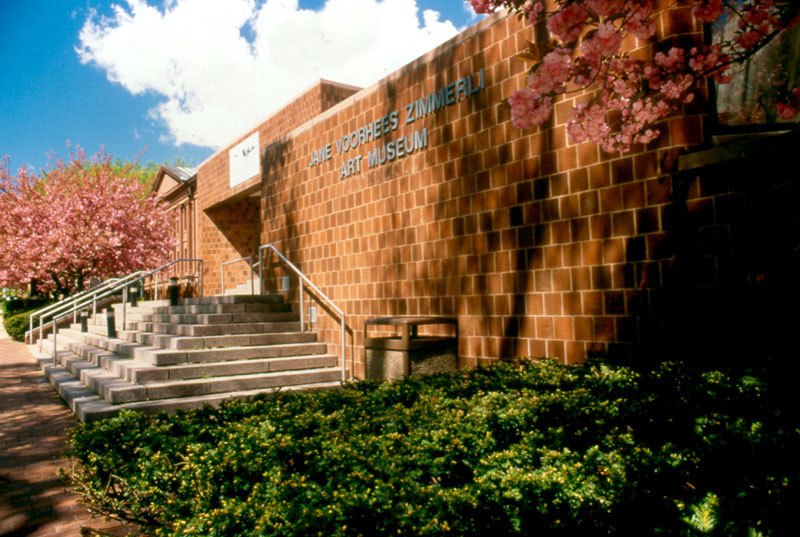
You can explore Krasnopevtsev through the Zimmerli Art Museum's Dodge Collection and the Pushkin Museum's Museum of Personal Collections.
Zimmerli's artist page provides dated collection examples and a biographical account. The Pushkin Museum's collection index includes his heritage alongside other individual collections. Check current displays directly; collection ownership and a scheduled presentation are different facts.
A pot may have lost the name of its maker long before the painter selected it. The painting need not lose its own history in the same way. Records of inscriptions, exhibitions and earlier ownership can keep that history available when a privately held panel returns to view.
At CoArt Market, every object carries a cryptographic certificate of authenticity, and we are building a market for fractional ownership of Blue Chip art and collectibles, a core part of the system we are working on now.
If you had found the broken vessel before the painter did, would you have kept it long enough to notice its shape?
Sources
- Afisha.London, Peschler sale results: afisha.london/en/2026/10/07/soviet-nonconformist-art-peschler-bonhams/
- Bonhams, sale announcement and results: www.bonhams.com/press_release/41724/
- Interenchères, Peschler collection sale, lot 5: www.interencheres.com/art-decoration/the-eric-a-peschler-collection-non-conformist-art-of-the-soviet-era-689861/lot-88954426.html
- Doyle: www.doyle.com/auction/lot/lot-106---dimitri-krasnopevtsev/?au=9145&ef=&et=&ic=False&lot=1473085&sd=0&so=0&st=&sto=0
- Zimmerli Art Museum, Dodge Collection, Dmitrii Krasnopevtsev: dodge.zimmerli.rutgers.edu/artists/dmitrii-krasnopevtsev
- MacDougall's: macdougallauction.com/en/catalogue/index?Asse=&AssetSearch%5Btitle%5D=&page=211&sort=lotID
- FindArtInfo, Dmitry Krasnopevtsev results: findartinfo.com/artist/dmitry-krasnopevtsev/11EABC0B7BD0B284AD5FC4B301B9DA2D/auction-results
- Pushkin Museum, Museum of Personal Collections: olk.pushkinmuseum.art/