

Eduard Steinberg: a letter the recipient could never open
A letter to Malevich opens a route from a flower seller to geometry, memory and named village lives
The ninety-fourth article of our series “Great artists” begins with a letter. Eduard Steinberg wrote to Kazimir Malevich in 1981. Malevich had died in 1935. Consider for a moment the freedom of writing a serious letter to a man who can neither interrupt you nor tell you that you have misunderstood his painting. And consider the risk. Every answer you hear may turn out to be your own.
Who was Eduard Steinberg?
Eduard Steinberg was a self-taught painter who moved from recognizable people and objects toward a geometric language of memory and spiritual inquiry.
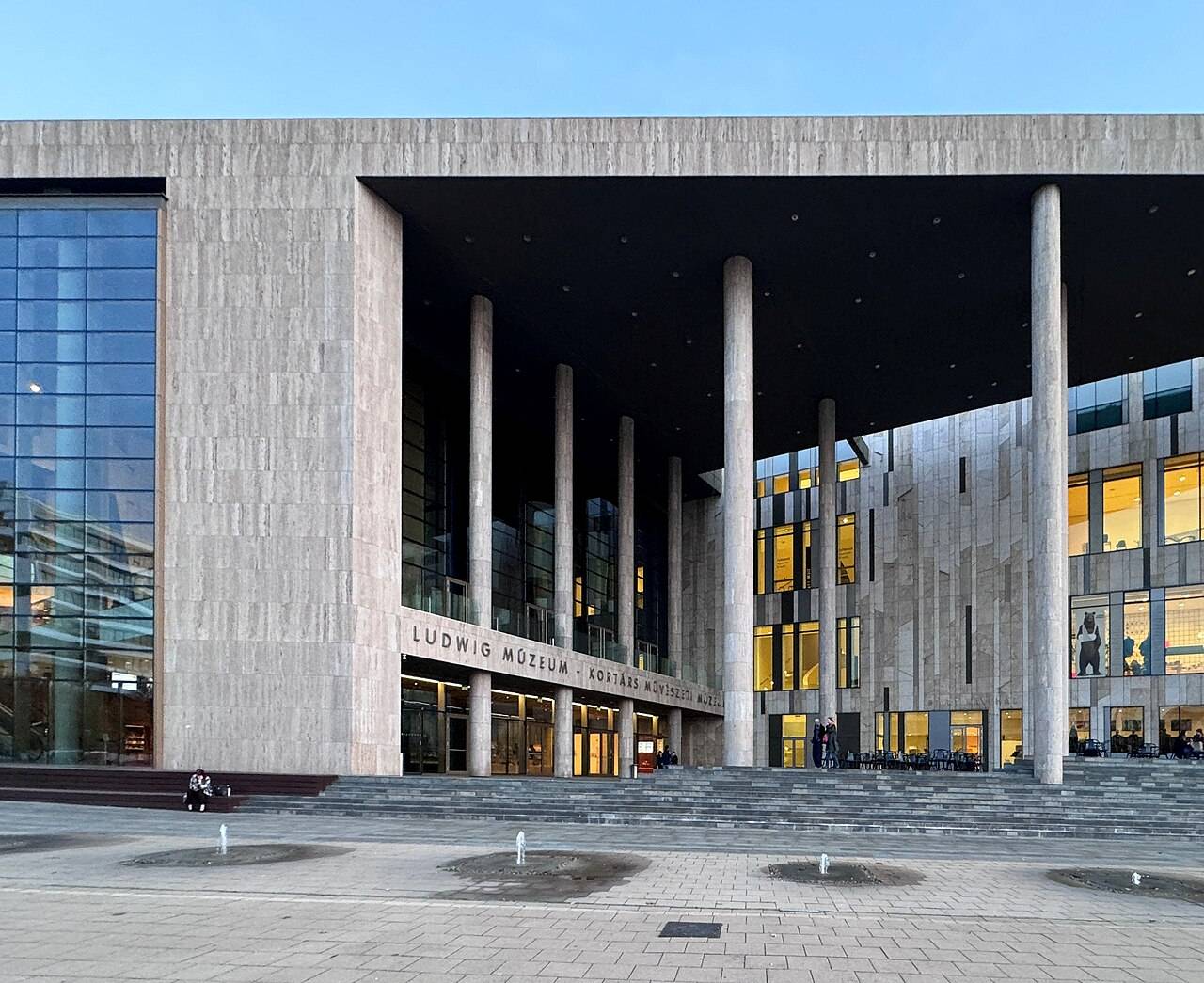
Steinberg learned from his father Arkady, a poet, translator and artist who had survived imprisonment. There was no formal art school in Eduard’s training. In 1962 he moved to Moscow. Later his working life took him to Munich and Paris. Budapest’s Ludwig Museum shows, on long-term loan, a Composition identified by the months November and December of 1979. I like the modest precision of those two months. The image might strike us as timeless, yet the title gives it back a winter and a stretch of somebody’s working life.
The route matters because geometry can look as though it arrived without a biography. A triangle does not announce the place where somebody learned to paint. Steinberg's development gives the shapes a history without turning every shape into a secret portrait.
I would keep the early people and later compositions in the same conversation. The distance between them is part of the career. We do not have to pretend that the later work explains the earlier work, or that a flower seller was waiting all along to become a square.
Why address Malevich?
Steinberg addressed Malevich because the earlier painter's radical geometry had become a serious spiritual and artistic problem for him.
The Black Square posed a spiritual question for Steinberg. His letter gives us one artist’s encounter with another’s work across a historical break. A square is easy enough to copy with a ruler. Inheriting the problem that led somebody to paint it is quite another undertaking. What would you ask an artist from an earlier generation if you were allowed to send a picture along with your letter?
The letter does not require us to read the two artists as participants in an uninterrupted school. There had been a break, and Steinberg knew it. Addressing an absent predecessor can acknowledge that break while insisting that a conversation remains possible.
I find it helpful to distinguish the borrowed form from the inherited question. A square can be reproduced accurately and still answer nothing. The more demanding inheritance is the freedom to ask why that form should occupy a painting at all. That question has to be asked again in another life.
What became of a later Composition?
The later Composition has a documented route through a Paris gallery and a Belgian collection before its Christie's sale.
A canvas from 2000 passed through Galerie Claude Bernard in Paris and into a Belgian private collection. Christie’s records €13,970 for its Paris sale on December 4, 2025. Its title is simply Composition. On another Composition Sotheby’s documents a date on the reverse and two gallery labels on the stretcher. With titles as spare as these, turning a picture around can do more for its identity than a page of adjectives.
This is where a deliberately general title puts pressure on the rest of the record. A photograph, dimensions, an inscription and the names of earlier owners begin distinguishing one Composition from another. The spareness of the title makes those material details more useful, not less.
The same applies when a work passes into a museum. A collection can preserve a date or inscription that would never be visible in a small reproduction. Information on the reverse may restore a place and a moment to an image that seems to float outside ordinary time.
What connects Steinberg's flower seller with his later geometry?
Steinberg's early figurative paintings and later abstractions belong to a developing practice whose subjects, forms and references changed over time.
The continuity is easier to explore through a collection than through a slogan about artistic progress. Looking at the Wiesbaden material, I would ask what happens to the weight of a shape, the space around it and the relation between a figure and its surroundings. Those questions can survive a considerable change of subject.
A village name in a title adds something a purely formal account can miss. Geometry can carry a dedication without becoming an illustration. We are told that somebody mattered; the painting does not have to supply a likeness as proof. That gives the viewer a different responsibility from identifying a face.
The letter to Malevich and the named village compositions also pull in different directions. One addresses a famous predecessor; the other preserves particular people. I would hesitate to let the great historical name drown out the less celebrated names. They occupy the same career, and neither needs to apologize for being there.
Try starting with the man selling flowers. Museum Wiesbaden dates its Flower Seller to 1962. The museum received 83 works from his widow, Galina Manevich. Its archive lets us follow the change within one collection. During the late 1960s, organic shapes began to assume a life of their own. By the middle of the 1970s geometry predominated. A precise date for the handover would be convenient. Two inscriptions give us something better.
In January 1967 Steinberg dated a composition with letters and flowers. In September he dated one with a seashell and stones. MacDougall’s sold them in the same auction on November 28, 2018. The flowers realized £8,645 and the shell £5,054. Imagine reading the word Composition on an old label and trying to picture the work from that alone. Would you have guessed that the painter had given you a whole year in which to look for flowers and shells?
By 1986 a name could do the work a recognizable face once did. The Wiesbaden archive illustrates a village-cycle composition naming Nyura, Petya and Kolya Zaitsev. Put it beside the flower seller. The early painting lets a viewer recognize a human occupation. The later title identifies particular people, yet asks you to find your own way from their names into the painting. Where, in those two pictures, do you feel you have learned more about a person?
Bukowskis, in its own results for sale 566, records a hammer price of SEK 48,000 for another Composition, lot 252.
What are five facts about Eduard Steinberg?
These five details connect the work with specific events, materials and collections.
1. His father Arkady was a poet, translator and artist, and helped guide his artistic education.
2. He received no formal art-school training.
3. His letter to Malevich dates to 1981, decades after its addressee's death.
4. Budapest's Ludwig Museum records Composition November–December, dated 1979.
5. Museum Wiesbaden records eighty-three works donated by his widow Galina Manevich in fulfillment of his wish.
What have Eduard Steinberg's works sold for?
Christie’s identifies the Paris canvas as a square measuring 130 centimeters on each side. Its reverse bears the place name Paris. That inscription matters to a buyer trying to follow a painter who worked in several cities. The published estimate was €6,000 to €8,000.
Two works dated 1982 were offered together as Composition in the Eric A. Peschler collection at Bonhams Paris. Afisha.London’s report on the October 5, 2026 sale gives €40,960 for the pair. Dividing by two would give us an exact number and lose the most interesting part of the transaction. The buyer could take both paintings home and decide how far apart to hang them. If you owned them, would you give them a wall together, or hang one around the corner so that you encountered the second with the first still in your mind?
Keeping these references visible is more useful than forcing them into one ranking. Each describes a different transaction.
Where can you see Eduard Steinberg's works?
You can explore Steinberg at Museum Wiesbaden and through the Ludwig Museum in Budapest.
Wiesbaden's archive provides the stronger route for following changes across his career. Budapest offers a precisely identified example of the mature geometric painting. Check current displays with the museums; an online collection record remains useful even when the particular canvas is in storage or on loan.
There is a practical lesson here for anyone caring for a painting called Composition. Give its history enough detail to remain identifiable when its next owner, curator or reader comes looking for it. The painting has chosen a modest name. Its documentation need not be equally reticent.
At CoArt Market, every object carries a cryptographic certificate of authenticity, and we are building a market for fractional ownership of Blue Chip art and collectibles, a core part of the system we are working on now.
If you wrote to an artist who could never answer, would you send a question, an argument or a painting?
Sources
- Museum Wiesbaden, Steinberg archive and illustrated chronology: museum-wiesbaden.de/eduard-steinberg
- MacDougall’s, November 2018 results, lots 257–258: macdougallauction.com/uploads/documents/results/5f58566060cda.pdf
- Invaluable, catalog transcriptions with dates on the reverse: www.invaluable.com/artist/stejnberg-eduard-86zm7b9qsh/sold-at-auction-prices/?page=2
- Bukowskis, sale 566 results: www.bukowskis.com/en/auctions/566/results.pdf
- Afisha.London, Peschler sale results: afisha.london/en/2026/10/07/soviet-nonconformist-art-peschler-bonhams/
- Bonhams, sale announcement and results: www.bonhams.com/press_release/41724/
- Christie's, Art Contemporain online, Composition, 2000: onlineonly.christies.com/s/art-contemporain/eduard-steinberg-1937-2012-63/282863
- Sotheby's, Post War And Contemporary Russian Art From A Private Collection: www.sothebys.com/en/buy/auction/2021/post-war-and-contemporary-russian-art-from-a-private-collection/composition
- Ludwig Museum, Budapest, Composition November December: www.ludwigmuseum.hu/en/work/composition-november-december