

Edward Hopper: the silence between people
Nighthawks, Chop Suey and the silence between people that Hopper painted better than anyone
The twenty-seventh article of our series “Great artists” begins inside a brightly lit diner. Four people are there. Outside, the city street is empty. We can see them through a large window, but we cannot hear a word they are saying.
Who was Edward Hopper?
Edward Hopper was an American realist painter, born in Nyack, New York, in 1882, whose pictures of diners, hotel rooms, offices and empty streets made him one of the best-known painters of modern American life. He studied art in New York and traveled to Paris three times between 1906 and 1910. But the artist who became famous for his images of American life did not find immediate success.
For years he supported himself as an illustrator. Commercial work paid the bills, although painting was what he wanted to do. He sold his first canvas at the Armory Show in 1913, according to the Whitney Museum, and had a solo exhibition at the Whitney Studio Club in 1920. Recognition came gradually rather than all at once.
This period matters because the familiar Hopper of museum walls can look inevitable from a distance. It was not. Like many artists, he spent years balancing the work that supported him with the work through which he wanted to be remembered.
By the 1930s he had become an established figure in American art. His subjects were often places people passed without a second thought: a window, a street corner, a room with sunlight on the wall. Hopper gave these ordinary settings an unusual intensity. Something seems about to happen, or perhaps something has just happened. The painting does not tell us which.
He died in New York in 1967. His images continue to appear in conversations about cinema, architecture and the experience of modern cities. That is a long life for pictures in which, at first glance, so little seems to happen.
Why is Nighthawks so famous?
Nighthawks (1942), in the Art Institute of Chicago, is famous because it turns an all-night diner into an image of people who are together and apart at once, seen through glass by a viewer who cannot join them. Inside, a server stands behind the counter while three customers sit under a long sweep of glass and electric light. The street outside feels unusually still.
The painting's composition makes us observers. We are outside, looking in. The sharply lit interior is exposed to us, yet the people remain private. We cannot know what they are thinking, whether they know one another or how long they intend to stay.
The absence of an obvious entrance adds to the strange effect. The diner looks accessible because we can see nearly everything inside, but the painting gives us no easy way to join the people there. Hopper turns an everyday place into an image that feels familiar and slightly impossible at the same time.
It is easy to call all Hopper paintings lonely. The label can also close the conversation too quickly. Solitude can feel peaceful, uncomfortable, chosen or imposed. The same image can suggest different things to different viewers, and it may change for the same viewer over time.
What Hopper does particularly well is leave that space open. He gives us the light, the figures and the room. We bring the rest.
Who was Jo Hopper, and why does her story matter?
Jo Hopper, born Josephine Nivison, was an American painter who married Edward Hopper in 1924 and was his partner in work as well as in life. She was his former classmate. She modeled for many of the women in his paintings and kept records of his works, providing information that remains valuable to researchers.
Jo was an artist in her own right. Her story should not be reduced to the roles of wife, model or keeper of her husband's records. The difference between the attention given to Edward's work and the treatment of Jo's art after her death has become an important subject for scholars.
Hopper scholar Gail Levin has described how a substantial part of Jo's artistic estate was rejected or discarded after it came to the Whitney. That account raises difficult questions about whose work institutions preserve and whose contribution later generations are able to study. It also reminds us that an artist's legacy is shaped by decisions made after the artist is gone.
Their relationship was complicated, and the surviving accounts do not require us to turn it into either a perfect artistic partnership or a simple morality tale. What we can say is that Jo's own art and her contribution to Edward's career deserve attention alongside the paintings for which he became famous.
Why do Hopper's paintings look like scenes from films?
Hopper's paintings look like film stills because he frames a single moment of an unseen story, with strong light, a fixed viewpoint and distance between the figures, and leaves out the beginning and the ending. A woman sits alone in a room. Light falls across a wall. A house stands beside railway tracks.
This is one reason his work has become so closely associated with cinema. Framing, light and the distance between figures all influence how we interpret a scene. A person seen from outside a window can feel very different from the same person seen across a table.
Consider the difference between a busy image and a quiet one. A dramatic event tells us where to look. Hopper often removes the event and lets the setting carry the tension. We begin to notice the angle of a window, the shape of a shadow or the way one person sits apart from another.
His landscapes and maritime subjects deserve attention too. Cape Cod, coastal buildings and boats appear throughout his career. They show that his interest in atmosphere was not restricted to New York diners and hotel rooms. A lighthouse or a boat can create the same sense of distance as a figure in an empty room.
Hopper was a realist, but his realism is selective. He constructs a mood from what he includes and what he leaves out. That is precisely why an apparently ordinary place can stay in the mind long after we have stopped looking at it.
What is Edward Hopper's most expensive painting?
Hopper's most expensive painting is Chop Suey (1929), which sold for $91,875,000 including buyer's premium at Christie's New York on November 13, 2018, from the collection of Barney A. Ebsworth. That is his auction record. The painting portrays women in a restaurant interior and brings together many of the qualities associated with Hopper: urban life, light, looking and the uncertain relationship between people sharing a space.
The record belongs to Chop Suey. It does not belong to Nighthawks, which is in the Art Institute of Chicago's collection. The two paintings are often mentioned together because both show public interiors, but they have different subjects and histories.
The latest came in November 2026. On November 18, 2026, The Martha McKeen of Wellfleet (1944), a sailing picture from the collection of Baroness Carmen Thyssen, sold at Sotheby's New York for $47.83 million with fees, against an estimate of $20 million to $30 million, HENI reported. That makes it his second-highest result at auction. Earlier the same year, Monhegan Lighthouse led Sotheby's Modern Day Auction in New York in May with $4.1 million.
Those are completed public sales. They involve individual works with their own histories, rather than a single price that can be applied to everything Hopper made.
What are five facts to remember about Edward Hopper?
Five details help explain his career:
1. Hopper was born in Nyack, New York, in 1882.
2. He supported himself through illustration before his paintings brought wider recognition.
3. His wife, Jo Nivison Hopper, was an artist and an important participant in his working life.
4. Nighthawks is in a museum; Chop Suey set his auction record.
5. His subjects included coastlines and boats as well as city streets and interiors.
Where can you see Edward Hopper's paintings?
You can see Hopper's paintings at the Whitney Museum of American Art in New York, which holds a major collection of his art and materials, and at the Art Institute of Chicago, which holds Nighthawks. Check museum listings before visiting: a work in a collection is not necessarily on display every day.
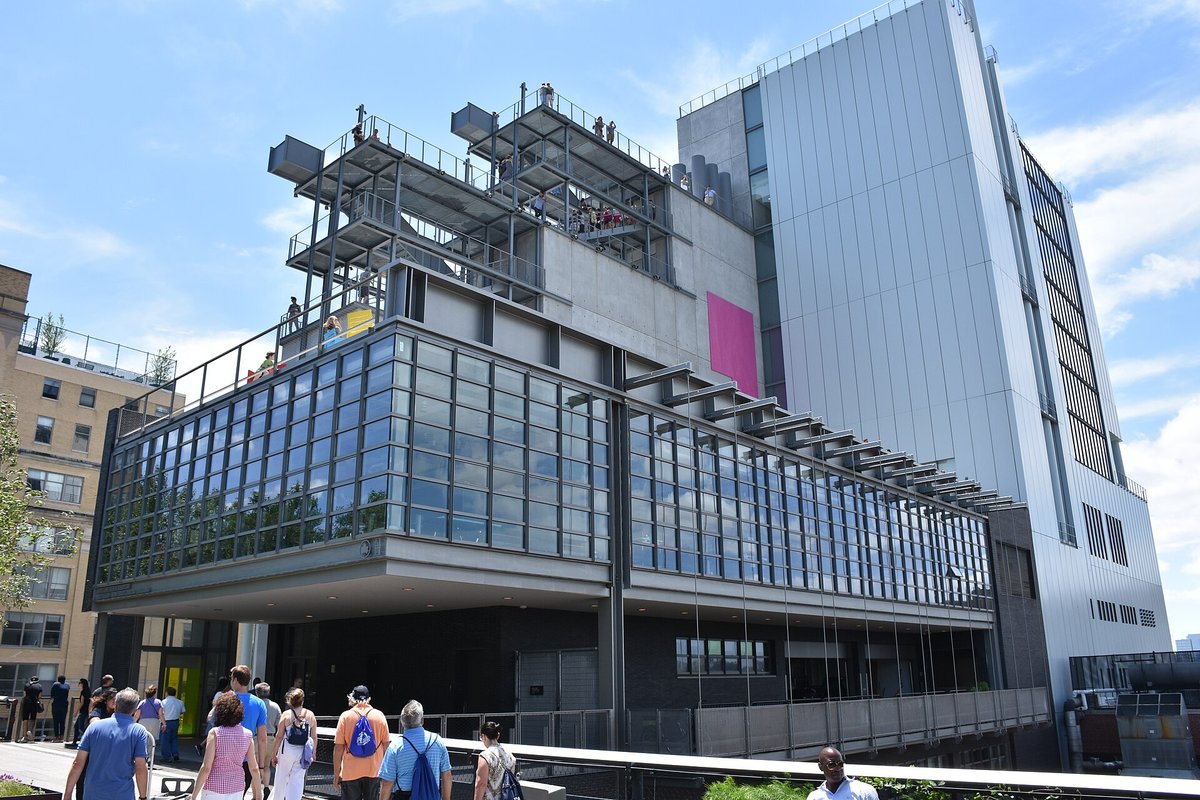
Whitney Museum of American Art, New York holds the largest group of his works, much of it from Jo Hopper's bequest.
Art Institute of Chicago holds Nighthawks.
Smithsonian American Art Museum, Washington holds works by Hopper.
At CoArt Market, every object carries a cryptographic certificate of authenticity, and we are building a market for fractional ownership of Blue Chip art and collectibles, a core part of the system we are working on now.
Hopper does not tell us what to feel when we look through the window of his diner. He simply leaves the light on. So what do you see there: isolation, companionship, or a story of your own?
Sources
- Whitney Museum of American Art, about Edward Hopper and Jo Nivison: whitney.org/education/schools-educators/k-12/teaching-materials/teacher-guides/hopper-new-york/about
- Art Institute of Chicago, Nighthawks: www.artic.edu/artworks/111628/nighthawks
- Smithsonian American Art Museum, Edward Hopper: americanart.si.edu/artist/edward-hopper-2297
- The Art Newspaper, Jo Hopper's bequest and the Whitney's sales (27 April 2023): www.theartnewspaper.com/2023/04/27/duplicative-or-discarded-whitneys-sale-of-more-hopper-works-from-historic-bequest-comes-under-scrutiny
- Gail Levin, research on Edward and Jo Hopper: gaillevin.commons.gc.cuny.edu/
- The Art Newspaper, record $91.9m sale of Chop Suey (14 November 2018): www.theartnewspaper.com/2018/11/14/record-dollar919m-sale-of-edward-hoppers-chop-suey-buoys-confidence-at-christies-american-art-sale
- Christie's, November 2018 sale results, including Chop Suey: press.christies.com/wp-content/uploads/2023/09/30d7ae8feb7ffd47679fedb5aeabd899.pdf
- Sotheby's, The Martha McKeen of Wellfleet, Modern Evening Auction, 18 November 2026, lot 109: www.sothebys.com/en/buy/auction/2026/modern-evening-auction-4/the-martha-mckeen-of-wellfleet-2
- HENI, Sotheby's Modern Evening Auction in New York, November 2026: heni.com/news/article/sotheby-s-modern-evening-auction-in-new-york-2026-11-19
- Sotheby's, New York spring season 2026 wrap-up: www.sothebys.com/en/articles/editorial-new-york-2026-spring-season-wrap-up