

Ilya Kabakov: the neighbor who missed the launch
An absent tenant, a hole in the ceiling and the neighbors left to explain an impossible departure
The ninetieth article of our series “Great artists” begins with a noise upstairs. By the time you reach the door there is a hole in the ceiling, an empty launching apparatus and nobody around who can give you a satisfactory explanation. Would you look up through the hole first, or go and find a neighbor? I ask because those are two quite different ways of entering Ilya Kabakov’s work. One makes you an explorer. The other makes you a resident of a communal apartment with a fairly urgent interest in who is going to repair the ceiling.
Who was Ilya Kabakov?
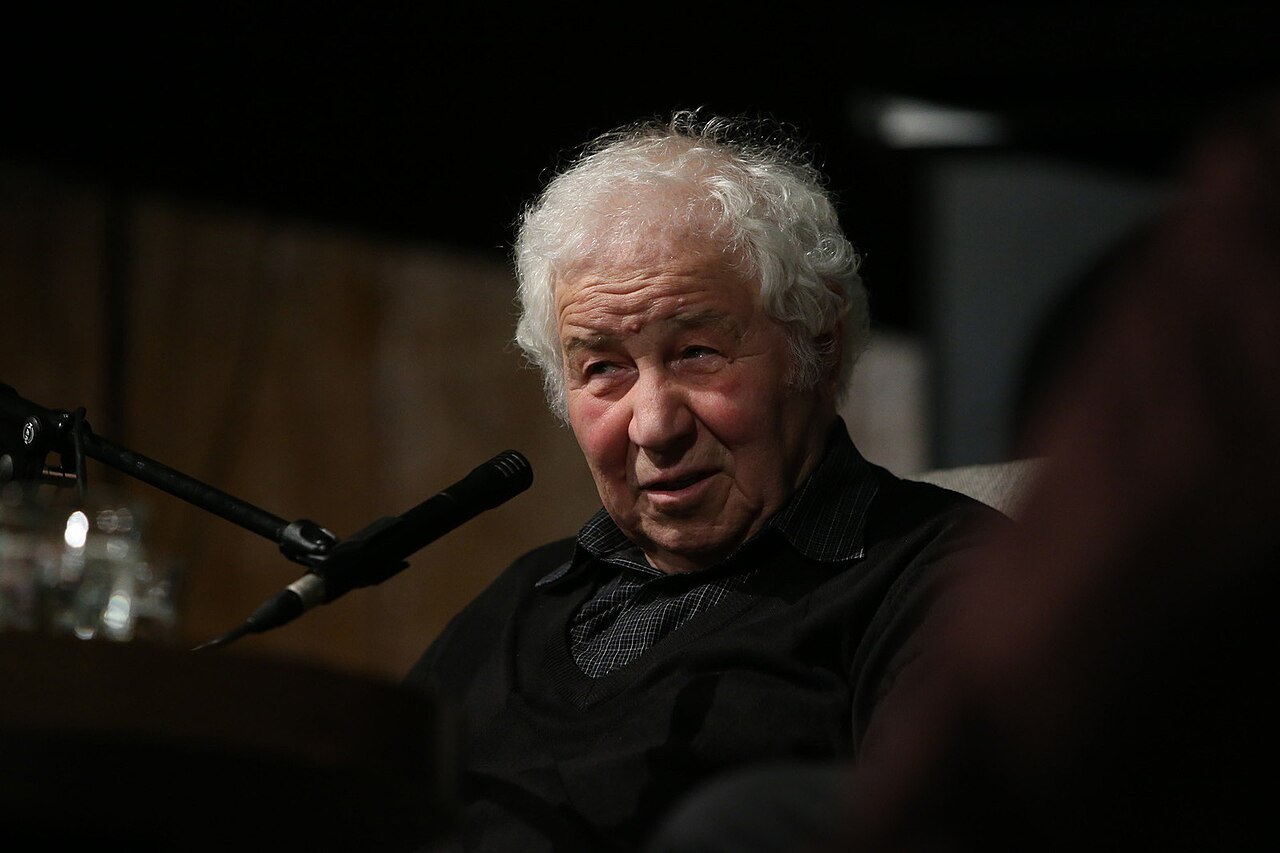
Ilya Kabakov was a painter, illustrator and conceptual artist whose installations turn the viewer into a witness to somebody else's life.
Kabakov earned his living illustrating children’s books in Moscow. A child turning a page controls the pace of a story. An adult peering through the door of his installation enjoys much the same privilege, with the additional pleasure of feeling slightly guilty about looking. Born in 1933 in what is now Dnipro, Ukraine, he took up a six-month residency at the Kunstverein in Graz in 1987. In 1988 he began working with his future wife, Emilia. They married in 1992. A collaboration can change the size of what two people dare to imagine, and in their case it also changed who signed the work.
His imaginary residents are often introduced through their possessions, complaints and peculiar ambitions. We meet the evidence before we meet a reliable narrator. That order matters. A conventional portrait gives us a face and invites a biography. Kabakov can give us a room and make us begin constructing the person ourselves.
I find this a particularly effective way to make a visitor pay attention. Tell somebody that a man was lonely and they may sympathize. Show them the things he kept, the explanations he left and the objections of his neighbors, and they start doing the work of sympathy without being instructed. They may also become suspicious. Both reactions belong here.
Where did the tenant go?
Kabakov makes the tenant's departure convincing through the physical and verbal evidence left inside a room that the visitor cannot freely enter.
The title promises outer space. The room offers the remains of an experiment. In The Man Who Flew into Space from His Apartment the most important person has left before the visitor arrives. Kabakov gives the missing tenant a wonderfully serious ambition and leaves those of us still on earth the awkward job of deciding what happened. Listen to yourself describe the scene to somebody else. How long does it take before you say ‘he flew’ as if you had actually seen him go?
The artists' archive describes boards restricting the view. We are permitted to inspect enough to become curious, while being denied the comfortable position of an investigator with complete access. This is an ingenious distribution of authority. We have eyes, but the work decides where we put them.
The archive dates the installation to 1985 and says it was first realized in Kabakov's Moscow studio. There is something nicely unreasonable about imagining an escape from ordinary life being constructed inside the room where its inventor was actually working. The cosmos is immense. The practical problem begins with walls, plaster and the space available in a studio.
I would resist reducing the missing man to a symbol with one authorized meaning. Escape can be an act of courage, an extravagant delusion or a refusal to live with everyone else. The installation leaves enough space for those possibilities to disturb one another. If the neighbors dislike him, does that make his account less credible? If we admire his ambition, have we become less careful with the evidence?
The comic part arrives before the answer. We can find ourselves worrying about the equipment as though the central problem were engineering. That is when the room has already recruited us.
Who owns an empty room?
A Kabakov installation belongs to its collection as an arrangement of space, objects, texts and viewing conditions, rather than simply as a set of movable furnishings.
The artists’ archive lists Ilya Kabakov alone for the installation's exhibitions up to 1990 and records its entry into the Centre Pompidou collection in August 1989. The distinction matters because Ilya and Emilia Kabakov subsequently made installations together. A museum acquiring such a room assumes an unusual responsibility. The height at which you can peer inside, the things you can almost reach, even the absence of the tenant belong to the work. If you were looking after it, which detail would you photograph first for the person who must assemble it next time?
One could remove a chair from the room and still have a chair. Whether one would still have the same installation is a more demanding question. A visitor's restricted access, the distribution of information and the sense that somebody has just left are part of the encounter. The empty space has responsibilities too.
That makes the history of exhibitions unusually interesting. A room assembled in another city has to recover its ability to make a stranger hesitate at the entrance. The museum cannot preserve that hesitation in a box. It preserves the means by which it can happen again.
There is also a difference between a fictional person and the artist who invented him. Kabakov's characters should not be treated as disguised witnesses whose every statement can be transferred into his biography. They have their own misunderstandings and self-importance. Listening to them means allowing the possibility that they are wrong.
I like the generosity of that arrangement. The visitor is allowed to be intelligent without being all-knowing. Most of us have considerable experience of that condition already.
Why does Kabakov use stories and written explanations?
Kabakov uses written accounts to let several voices compete over what an object or an event means.
A label ordinarily tries to stabilize a museum experience. Here language can make the ground less stable. Somebody explains too much, somebody objects, somebody offers an account that sounds perfectly reasonable until its details begin to accumulate. The viewer has to decide how much trust to place in each voice.
Book illustration is relevant without becoming a simple explanation for everything that followed. A book teaches a reader to move between an image, a sentence and an imagined event. An installation can distribute those tasks around a room. You read, look up, walk a little and reconsider what you have just read.
This is why I would take time over a Kabakov text rather than treating it as the instruction sheet for the real visual experience. Reading can be the experience. And the moment you begin quietly disagreeing with an absent tenant, the room has acquired another resident.
What are five facts about Ilya Kabakov?
These five details connect the work with specific events, materials and collections.
1. He earned his living illustrating children's books before his international installation career.
2. The space-flight installation was first realized in his Moscow studio in 1985, according to the artists' archive.
3. That archive records its entry into the Centre Pompidou collection in August 1989.
4. DAAD records him as a guest of its Berlin artists' program in 1989–1990.
5. He began working with Emilia in 1988, according to the artists' biography; they married in 1992.
What have Ilya Kabakov's works sold for?
Phillips de Pury's February 29, 2008 press release identifies the previous evening's £2,932,500 result for ZHUK (Beetle) as a new artist record. The release also names the earlier £2,036,000 result for Chambre du Luxe in June 2007.
Phillips' archive also lists a complete set of the 10 Characters portfolios at $3,000. Those two purchases give the collector quite different things to do. One can face the painting from across a room. With a portfolio the story unfolds sheet by sheet.
These are transactions for one painting and one set of portfolios. They do not price an installation, an edition or a complete artistic career. I would keep the £2,932,500 figure beside the title, house, city and date whenever repeating it. Otherwise the most precise fact in a story becomes its least informative sentence.
Where can you see Ilya Kabakov's works?
Centre Pompidou, Paris holds The Man Who Flew into Space from His Apartment, according to the artists' archive.
MoMA, New York published a memorial essay by Ksenia Nouril on his life and characters.
The artists' own installation archive identifies the Pompidou collection and lists the work's exhibition history. Whether the installation is on view at a given moment is worth checking with the museum before a visit.
A room that has traveled needs a record of how it traveled. The same is true of the quieter objects that emerge from private collections. Knowing where something has been gives the next viewer more to work with than a convincing first impression.
At CoArt Market, every object carries a cryptographic certificate of authenticity, and we are building a market for fractional ownership of Blue Chip art and collectibles, a core part of the system we are working on now.
If you could ask the missing tenant one question, would you ask where he went or why he wanted to leave?
Sources
- Ilya and Emilia Kabakov, The Man Who Flew Into Space From His Apartment: www.kabakov.net/installations/2019/9/15/the-man-who-flew-into-space-from-his-apartment
- Ilya and Emilia Kabakov: www.kabakov.net/biography
- DAAD, Ilya Kabakov: www.daad.de/en/alumni/gallery/portrait/ilya-kabakov/
- Phillips, Ilya Kabakov: www.phillips.com/artist/3702/ilya-kabakov
- Phillips (PDF): www.dist.phillips.com/content/web/press/pdf_FEBRUARY_29_2008_LONDON.pdf
- MoMA, Ksenia Nouril, In Memoriam: Ilya Kabakov (1933–2023): post.moma.org/in-memoriam-ilya-kabakov-1933-2023/