

KAWS: from a bus shelter to a $14.8 million album
From altered ads in a bus shelter to a $14.8 million album: how KAWS crossed from the street to the auction room
The fortieth article of our series “Great artists” follows KAWS from interventions in street advertising to a painting sold in Hong Kong for almost $15 million. The image borrowed from an album cover that borrowed from another album cover. The auction added yet another layer.
Who is KAWS?
KAWS is the professional name of Brian Donnelly, an American artist and designer known for recurring characters, large sculptures, paintings and collectible editions. Born in Jersey City, New Jersey, in 1974, he studied illustration at the School of Visual Arts in New York.
Early in his career he worked with street advertising, adding his own drawn characters to posters displayed in public spaces such as bus shelters and phone booths. The interventions borrowed the visibility of advertising while changing what passersby saw. A polished commercial image could suddenly acquire a strange companion with crossed-out eyes.
That experience helped shape a practice that moves between public space, galleries, museums and objects made in editions. His characters appear in different materials and at very different scales, from small figures to enormous sculptures presented in cities and landscapes.
KAWS is often discussed through the categories of street art, toys, fashion and fine art. Each describes part of the story. None quite contains it. He has built a visual language that can be recognized by someone who has never entered an auction room – and by someone sitting in one.
What is KAWS's Companion?
Companion is one of KAWS's best-known characters, recognizable by its crossed-out eyes and cartoon-like form. It has appeared in paintings, sculptures, public installations and collectible objects.
The figure can look familiar without representing one fixed person or telling one fixed story. Its posture changes from work to work. It may stand, sit or cover its face. Those gestures give viewers a way to read emotion into a character whose eyes are marked with Xs.
Scale changes the encounter too. A small figure on a shelf invites a different relationship from a monumental sculpture in a public space. The image connects them, but they are not the same object. Their materials, editions and histories may be entirely different.
KAWS has also worked with characters and visual references drawn from popular culture. That familiarity is part of the attraction. We may recognize an outline before we know the artist's name, then notice that the familiar figure has been changed.
The Xs are a good example. They are simple enough to identify quickly, but they also make a face less readable. Is the figure asleep, absent, sad, comic or simply part of a graphic language? A viewer can bring more than one answer.
What is KAWS's most expensive work?
KAWS's most expensive work at auction is THE KAWS ALBUM (2005), a painting that reworks imagery associated with The Simpsons and the cover of the Beatles' album Sgt. Pepper's Lonely Hearts Club Band; Sotheby's Hong Kong sold it on 1 April 2019 for HK$115,966,000, approximately $14.8 million at the time. It gathers recognizable characters into a crowded group portrait marked by KAWS's visual language.
The chain of references is part of the pleasure. A viewer may recognize the arrangement from the Beatles, the characters from television, and the crossed-out eyes from KAWS. Each layer comes from a different place in popular culture. The painting brings them into one composition.
In 2019 the work was offered from the collection of Japanese designer and collector Nigo. Its presale estimate topped out at HK$8 million, about $1 million. The final price was roughly fifteen times that, and it remains KAWS's auction record.
That figure belongs to this painting. A small editioned figure and a large canvas may share characters, but a shared image does not make their materials, provenance or auction histories identical. The distinction is especially important for an artist whose imagery moves so easily between formats.
How did KAWS move between art, toys and fashion?
KAWS's work has reached audiences through exhibitions, public installations, collaborations and collectible objects. The variety is not an accident. His practice has consistently crossed the boundaries between an image shown in a gallery and one encountered in everyday culture.
A museum exhibition can bring together paintings and sculptures from different years. A collaboration can put a character on a product seen by people who may never visit that exhibition. Neither encounter automatically replaces the other.
There is also a question of accessibility. A large painting and an editioned object can enter very different parts of the market. But “accessible” is not a single price or a guarantee that every object is available to everyone. It is a question of how many routes people have into the work, and what information they can find when they arrive.
For collectors, the basic questions remain practical: what is the object, who made or authorized it, how many were produced, and what documentation accompanies this example? An image found online may be enough to recognize a character. It is not enough to establish the identity of an individual object.
KAWS's work makes that distinction visible because the same figures recur across so many formats. The viewer can enjoy the connection while still paying attention to the differences.
What have KAWS works sold for recently?
KAWS's recent auction results sit far below his 2019 record: one of his strongest results of 2026 was $374,100 with fees for SEPARATED, sold at Phillips New York on 21 May 2026. The 2019 record of HK$115,966,000 for THE KAWS ALBUM is the record for the artist, not a price for every painting based on a familiar cartoon.
Editions sell at other levels again. On 22–24 October 2026, a screenprint titled YOU SHOULD KNOW I KNOW sold in Phillips' Editions & Works on Paper sale for $7,740 with fees, and in London on 17 October 2026 UNTITLED (MBFG10) sold at Phillips for £61,920.
These are completed public sales of different works in different media. An estimate or a starting bid is not a completed sale. If an auction record does not make the result clear, I would rather leave a figure out than guess.
At CoArt Market, every object carries a cryptographic certificate of authenticity, and we are building a market for fractional ownership of Blue Chip art and collectibles, a core part of the system we are working on now.
Where can you see KAWS's work?
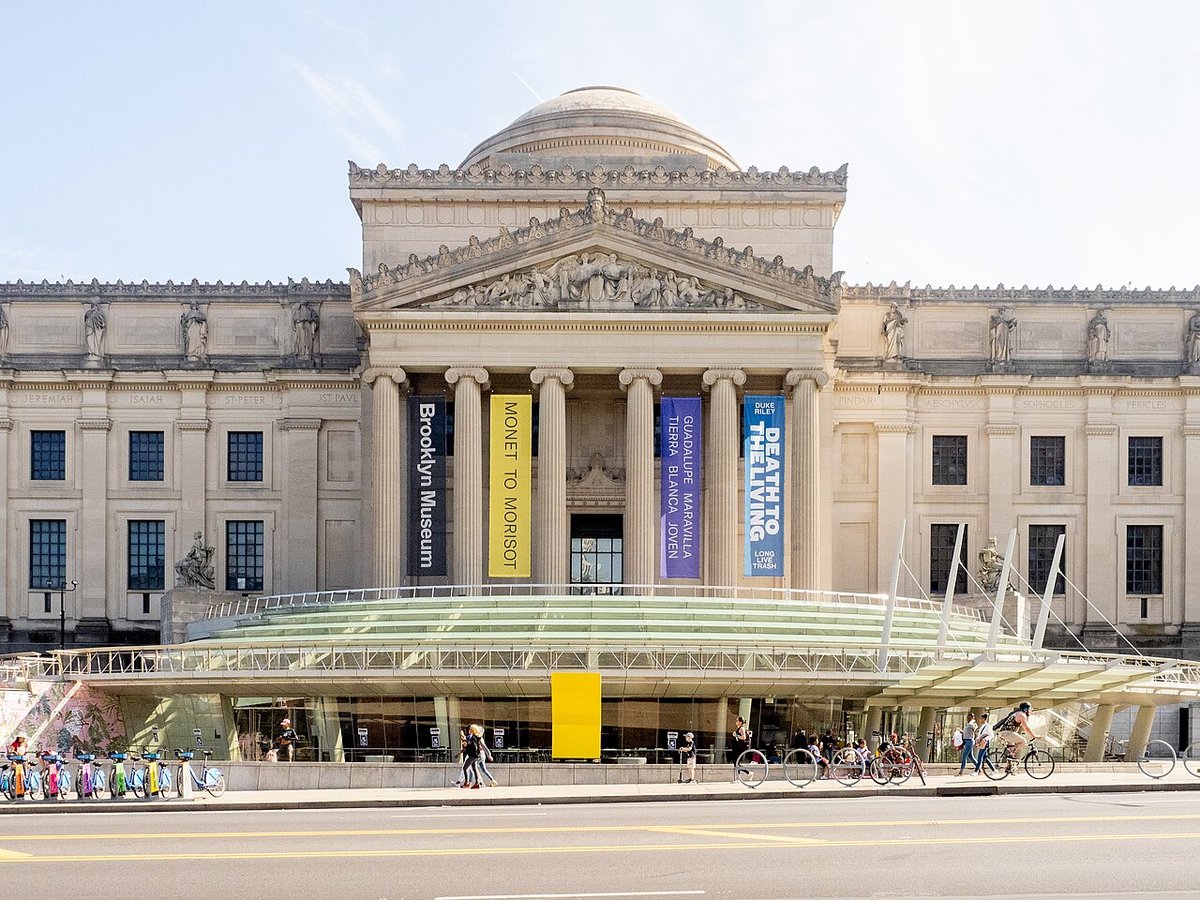
You can see KAWS's work in museum exhibitions rather than permanent displays: the Brooklyn Museum in New York showed the survey KAWS: WHAT PARTY in 2021, and the National Gallery of Victoria in Melbourne showed KAWS: Companionship in the Age of Loneliness in 2019–20. Check current displays before visiting; an exhibition that took place in a museum is not necessarily still on view.
What are five facts to remember about KAWS?
Five details are useful when looking beyond the auction headlines:
1. KAWS is the professional name of Brian Donnelly.
2. His early work included interventions in public advertising.
3. Companion appears in different sizes and materials, with different gestures.
4. THE KAWS ALBUM connects references from music, television and the artist's own imagery, and sold for about fifteen times its high estimate.
5. A painting, a screenprint and an editioned figure are different objects, even if they share a character.
A figure with crossed-out eyes can stand on a shelf, appear on a canvas or occupy a public space. The character may be familiar in each place, but the experience is not quite the same. Where would you rather encounter it first?
Sources
- Sotheby's, KAWS: biography and auction results: www.sothebys.com/en/artists/kaws
- ARTnews, "$14.7 M. KAWS Painting Smashes Auction Record in Hong Kong" (2019): www.artnews.com/art-news/market/kaws-auction-record-14-7-million-12267/
- Artnet News, "Sotheby's Was Hoping This KAWS Painting of 'The Simpsons' Would Sell for $1 Million. It Just Went for $14.7 Million" (2019): news.artnet.com/market/kaws-auction-record-sothebys-1505122
- Phillips, KAWS auction results: www.phillips.com/search/1?search=kaws
- American Folk Art Museum, KAWS biography: folkartmuseum.org/news/kaws-biography/
- Brooklyn Museum: www.brooklynmuseum.org/