

Marc Chagall: two lovers, a long exile and a painting kept for 89 years
Two lovers, a long exile and a painting kept for 89 years before it came to auction
The twelfth article of our series “Great artists” follows Marc Chagall and Bella Rosenfeld from Vitebsk to Paris, and one of his paintings from a private collection to a New York auction. The lovers in the picture float above the ground. Their real journey was less straightforward.
Who was Marc Chagall?
Marc Chagall was an artist born near Vitebsk in 1887, known for paintings, stained glass, theater designs and images that combine memory, Jewish culture and modern art. He lived and worked in several countries and died in France in 1985.
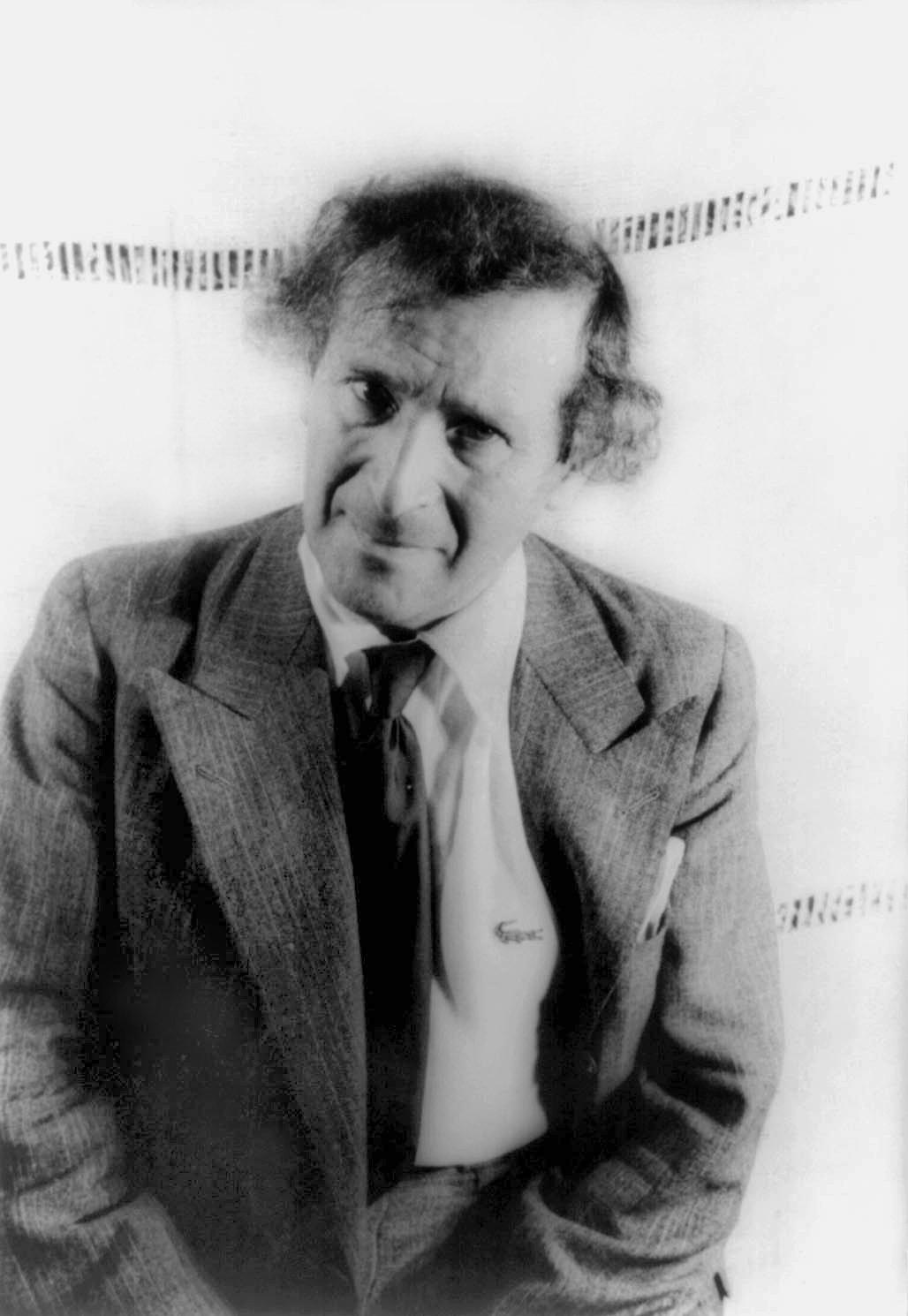
He grew up in a Jewish family in the Russian Empire, studied art in Vitebsk and Saint Petersburg, and moved to Paris as a young artist. The city introduced him to a world of painters experimenting with color and form. It did not make him forget the town he had left.
Vitebsk remained in his work through houses, animals, musicians and figures that seem to carry their own laws of gravity. Paris entered it too, with the Eiffel Tower appearing alongside memories of home. A place can stay with an artist without requiring a return ticket.
Chagall's life was shaped by revolution, war, exile and loss. He also made work full of color, tenderness and humor. I do not think we need to choose one version of his life and throw away the other. Both are visible if we look long enough.
Why is Marc Chagall famous?
Chagall is famous for dreamlike paintings in which lovers fly, musicians and animals enter unexpected places, and memories of Vitebsk meet the colors and forms of modern Paris. He also made important works in stained glass and designed for the theater.
One of his most recognizable images is a couple suspended above a town. The people are unmistakably human; the flight is unmistakably impossible. Chagall does not stop to explain how either fact can be true. He paints both, and lets us catch up.
His paintings are often described through a list of ingredients: a fiddler, a goat, a village, flowers, lovers. That is a useful way to remember what is in the picture. It tells us less about how the picture feels. The same ingredients can suggest celebration, homesickness or grief, depending on where he places them and what is happening in his life.
He worked with Parisian modernism but retained a vocabulary that was his own. The question was not whether the village was fashionable in Paris. Chagall brought the village with him.
Who was Bella Rosenfeld?
Bella Rosenfeld was Chagall's first wife, a writer and a recurring presence in his paintings, including the floating couples that became associated with his work. They married in 1915 and had a daughter, Ida.
Chagall and Bella met before his first extended stay in Paris. A visit back to Vitebsk in 1914 became much longer than planned when the First World War began. The couple married the following year, and Ida was born in 1916.
Bella appears in works from different periods. Sometimes the couple embraces; sometimes they rise above the town; sometimes the composition turns a familiar room into a place where ordinary movement no longer applies. These paintings have helped millions of people recognize their relationship. They should not reduce Bella to a decorative figure beside a famous painter: she also wrote about her own life and world.
The family later returned to France. During the Second World War they went into exile in the United States. Bella died there in 1944. Chagall continued to return to her image after her death, and the cheerful descriptions of flying lovers acquire another shade when we remember that.
What happened to Les Amoureux before its record sale?
Chagall's Les Amoureux, painted in 1928, entered a private collection that same year and remained in the family until it was offered at Sotheby's in 2017. Sotheby's provenance records the Paris gallery Bernheim Jeune acquiring it from the artist and the collector buying it from the gallery on 27 October 1928.
The painting shows an embracing couple in a night sky, among flowering bushes, with a bird in the clouds and a village glimpsed through the greenery. Sotheby's catalog reads it as a picture of "the loves of his life: his childhood sweetheart Bella Rosenfeld and France". Bella's dress carries the colors of the French flag: by then France had become an important part of the couple's life.
A painting can remain in one family for a very long time without standing still. Owners age, homes change, children inherit, and the world outside the windows becomes almost unrecognizable. The object keeps its place in the family while its public meaning can continue to change.
The catalog records the work's appearance at a Chagall exhibition in Basel in 1933. We therefore have more than the beginning and end of the journey: the artist, the gallery, an early owner, an exhibition and a later public sale. Each documented step is a useful piece of its history.
I like that the journey starts in the same year as the painting itself. Eighty-nine years later, it returned to a room full of people who had come to look and bid.
What is Marc Chagall's auction record?
Chagall's auction record is $28,453,000 including fees for Les Amoureux, sold at Sotheby's New York on 14 November 2017. It was the leading work in the auction and had remained in the same family's collection since 1928.
Sotheby's also records an earlier landmark: a 1923 version of L'Anniversaire sold for approximately $14.9 million in 1990 and stood as the artist's auction record for many years. The two paintings share a subject close to Chagall, but they are different works with different histories.
On the same evening as the 2017 Les Amoureux sale, another Chagall, Le Grand Cirque, sold for $16,034,000 including fees. Both figures include the buyer's premium; the hammer prices were lower. When you compare Chagall results, compare like with like.
Record prices are useful when they are attached to a particular painting, date and auction house. They do not mean that every Chagall print, drawing or painting belongs in the same category. Medium, condition, period, subject, ownership history and the individual work all matter.
And the 2017 record says something else: one family had lived with this painting for almost nine decades before the public sale. The time before an auction is part of a painting's story too.
What are five surprising facts about Chagall?
Five details connect the familiar flying figures with a much larger life:
1. A short return became a long stay. Chagall went back to Vitebsk in 1914 intending a visit; war and revolution kept him away from Paris for years.
2. Vitebsk had an avant-garde school. Chagall took part in the artistic life of the city after the revolution, alongside figures including Kazimir Malevich and El Lissitzky. Their ideas about art did not always agree.
3. His family helped preserve his work in exile. Centre Pompidou records that his daughter Ida arranged for works from his studio to be transported to New York during the war.
4. The Paris Opera ceiling caused controversy. Chagall's colorful ceiling for the Palais Garnier, completed in 1964, received criticism as well as admiration.
5. The record painting had a long family history. Les Amoureux remained in the same family from 1928 until the 2017 auction.
The Opera ceiling is a particularly good reminder that an image now treated as a beloved part of a building was once the subject of an argument. Culture does not always arrive with unanimous approval attached.
Where can you see Chagall's work?
You can encounter Chagall's paintings, stained glass and public commissions in France and the United States, among other places. Museum displays and loans change, so check the official website before making a special journey.
Musée national Marc Chagall, Nice is devoted to the artist and includes his Biblical Message paintings.
Centre Pompidou, Paris holds works including Double Portrait with a Glass of Wine. Check the institution's current venues and display arrangements.
The Museum of Modern Art, New York holds paintings including I and the Village and Birthday.
The Art Institute of Chicago holds the America Windows, Chagall's stained-glass work.
Palais Garnier, Paris contains his painted ceiling; visiting arrangements depend on the opera house's schedule.
A stained-glass window and an oil painting ask for different kinds of attention. In one, light enters from behind the image. In the other, Chagall had to make the light himself.
Why does a painting's history matter?
A painting's history matters because records of its owners, exhibitions and movements help us understand how it reached us. For Les Amoureux, the gallery, the family's long ownership and the 1933 exhibition add detail that an auction number alone cannot provide.
At CoArt Market, I want objects that have spent years in private hands to become visible again. Each object receives a cryptographic certificate of authenticity that records its path from owner to owner on the platform, and we are building a market for fractional ownership of Blue Chip art and collectibles, a core part of the system we are working on now.
Chagall carried Vitebsk into Paris and kept returning to Bella in paint even after he lost her. If you could spend an afternoon with one Chagall, would you choose the lovers above the city or the village below them?
Sources
- Centre Pompidou, artist biography: www.centrepompidou.fr/en/ressources/personne/c7pG96e
- Sotheby's, Les Amoureux, provenance and catalog: www.sothebys.com/en/auctions/ecatalogue/2017/impressionist-modern-art-evening-sale-n09740/lot.8.html
- Sotheby's, 2017 sale results, Les Amoureux and Le Grand Cirque: www.sothebys.com/en/slideshows/chagalls-lovers-lead-new-yorks-evening-sale
- Sotheby's, exact 2017 result and 1990 comparison: www.sothebys.com/en/videos/marc-chagalls-double-portrait-with-wine-glass
- Sotheby's, artist biography: www.sothebys.com/en/artists/marc-chagall