

Mark Rothko: the man in the compartment nobody recognised
Born in Dvinsk, the face nobody recognised in our train-compartment quiz, and a canvas that sold for $98.4 million
The first of our series "Great artists" names the hardest face in our train-compartment quiz, Mark Rothko of Dvinsk, and looks at the museum in his home town and at why his paintings cost what they do today.
Who was Mark Rothko?
I recently posted a picture of a train compartment with three great figures in it. Two of them were named quickly. The third is still waiting. So here is the answer, and the first article of a new series in our journal, Great artists. The man in the compartment nobody recognised is Mark Rothko.
Mark Rothko was an American painter, born Markus Rothkowitz on 25 September 1903. He is best known for his colour field paintings: large, soft rectangles of colour, which he painted from 1949 until his death in New York in 1970. His place in the history of 20th-century art is firm, and deserved.
You might think a man who painted rectangles would be easy to spot in a photograph. The thing is, his paintings are famous and his face is not. Rectangles have no faces. Fair enough.
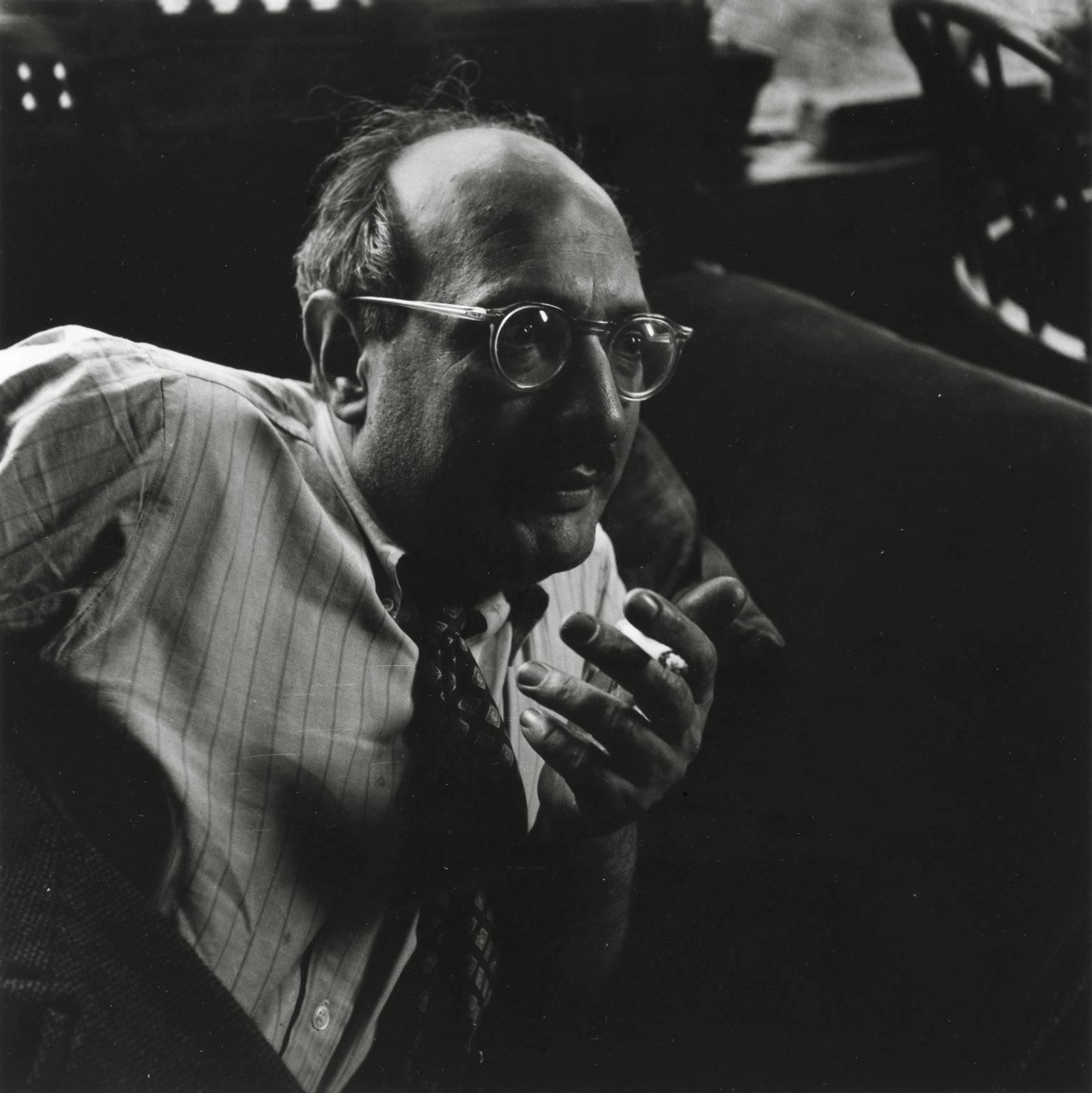
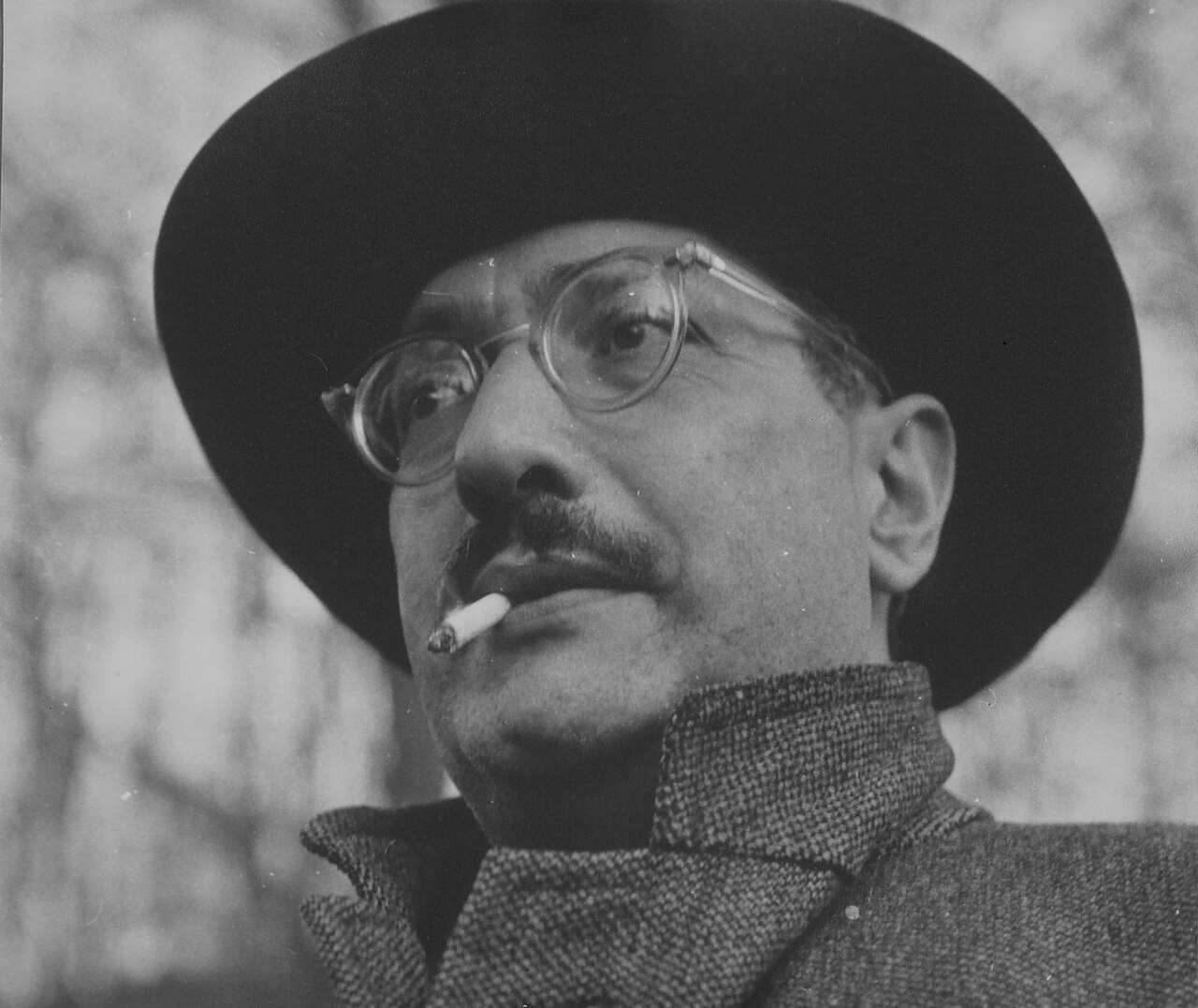
So here is the face. Two portraits by the photographer Consuelo Kanaga, from the collection of the Brooklyn Museum.
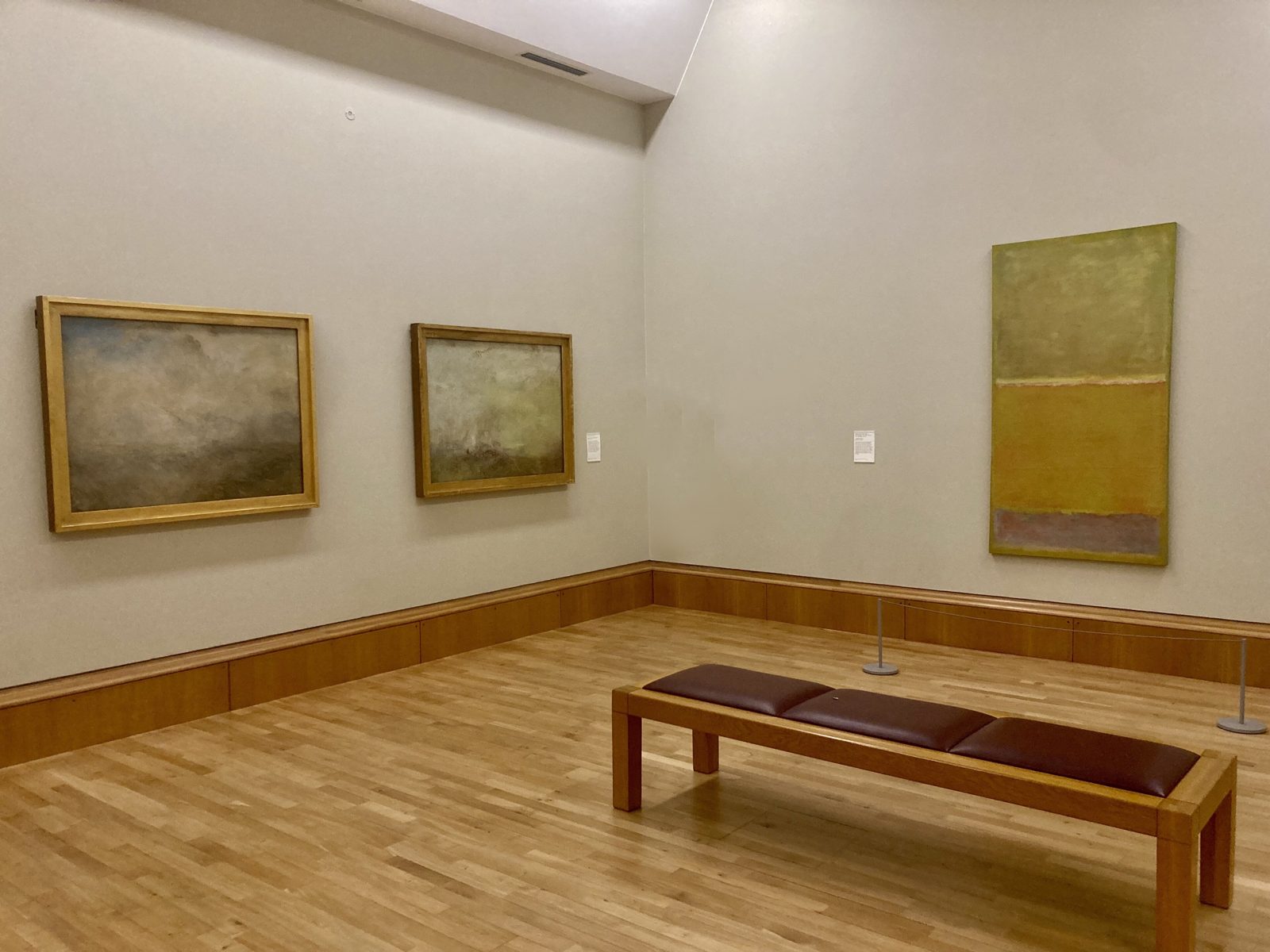
A Rothko at Tate Britain hangs in the Turner gallery, beside two of Turner’s misty seascapes, and that is no accident. Rothko admired Turner. At the Turner exhibition at the Museum of Modern Art in 1966 he said, as Tate tells it: "This man Turner, he learnt a lot from me." Turner was born in 1775, Rothko in 1903. Modesty was not among Rothko’s colours. Yet he meant it as a compliment, and he backed it up: he gave nine of his paintings to Tate, partly so that they would share a home with Turner.
Why is Rothko from Daugavpils?
Because Daugavpils is Dvinsk. When Rothko was born there, the town was called Dvinsk and belonged to the Russian Empire. Today it is Daugavpils, in Latvia.
In late 1913, at the age of ten, he arrived at Ellis Island with his mother and his sister. The family settled in Portland, Oregon. In 1923 he moved to New York.
Did his home town forget him? It did not. In 2003, for the centenary of his birth, a monument to him by the sculptor Romualds Gibovskis was unveiled on the bank of the Daugava.
What can you see at the Rothko Museum in Daugavpils?
Original Rothko paintings, in the town where he was born. The museum opened on 24 April 2013 as the Daugavpils Mark Rothko Art Centre and today calls itself the Rothko Museum. It stands inside the arsenal building of the Daugavpils fortress.
The paintings come from the artist’s family, his children Kate Rothko Prizel and Christopher Rothko. They are rotated regularly: since the museum opened, visitors have seen twenty-four different works from the family collection, the museum says. The current display, "Rothko. From the Family Collection", runs until April 2029.
I visited the museum a few years ago. You will not find my photographs of the Rothko originals here: in the room where they hang, photography is not allowed. So you will have to go and see them yourself, which is, frankly, the right way to see a Rothko.
What I remember most is the scale, and the lack of it. A huge centre named after Rothko, several exhibitions running at once, artists from Latvia and across Europe. And Rothko’s own paintings in a relatively small room, with practically no guard in sight. I stood in front of paintings worth millions of dollars, in a half-empty building with nobody watching, and had a strange feeling: wealth lying, quite literally, by the side of the road.
I was there with a friend, Viktorija Valujeva, an artist who lives in Daugavpils and whose own work is well worth a look. She knows Rothko’s painting well, and she showed me around, telling me about the museum and about Rothko himself. Thank you, Viktorija. Her work is at valujeva.com.
Why do Rothko’s paintings cost so much?
Because the people who buy them agree that they are worth it. On the market of art and collectibles there are no objective prices. There are only comparisons, and the judgment of the people who pay.
Rothko is one of those artists whose prices make people outside the art world open their eyes very wide. "Seriously? Two rectangles? I could paint that myself." I hear it every time. And every time it tells me the same thing: the speaker knows nothing about the art world, and even less about how Blue Chip artworks hold their value. (Go ahead, by the way. Paint it, then find a buyer. I’ll wait.)
Look at the figures, though. In late 1945 his solo show at Peggy Guggenheim’s Art of This Century gallery sold few paintings, at prices from $150 to $750.
Now the story of one painting. In 1967 a young collector, Agnes Gund, told her friend Emily Hall Tremaine that she dreamed of owning a Rothko. "Let’s go to Rothko’s studio," Tremaine replied. There, at the artist’s own recommendation, Gund bought No. 15 (Two Greens and Red Stripe), painted in 1964. She later became president of the Museum of Modern Art and gave more than a thousand works to museums. This one she kept at home for almost sixty years.
After her death, on 18 May 2026, Christie’s in New York offered it for the first time. Bidding opened at $60 million and drew more than ten bids. The hammer fell at $85 million; with fees the painting sold for $98,385,000, the auction record for Rothko (TheValue, HENI News). The record before that, $86.9 million, was set in 2012 by Orange, Red, Yellow, also at Christie’s.
In my view, this is a textbook case of art investment: a collector with an eye buys from the artist’s studio, keeps the painting for decades, and the market does the rest. (My personal opinion, not investment advice.)
It is a little like finding that the bus ticket in your old coat now buys the bus company.
There is a small irony here too. In 1958 Rothko was commissioned to paint murals for the Four Seasons restaurant in the Seagram Building. He grew disgusted with the idea of his paintings decorating a room for wealthy diners, and he gave the money back. Today, only the wealthiest diners could buy one. The market has a sense of humour.
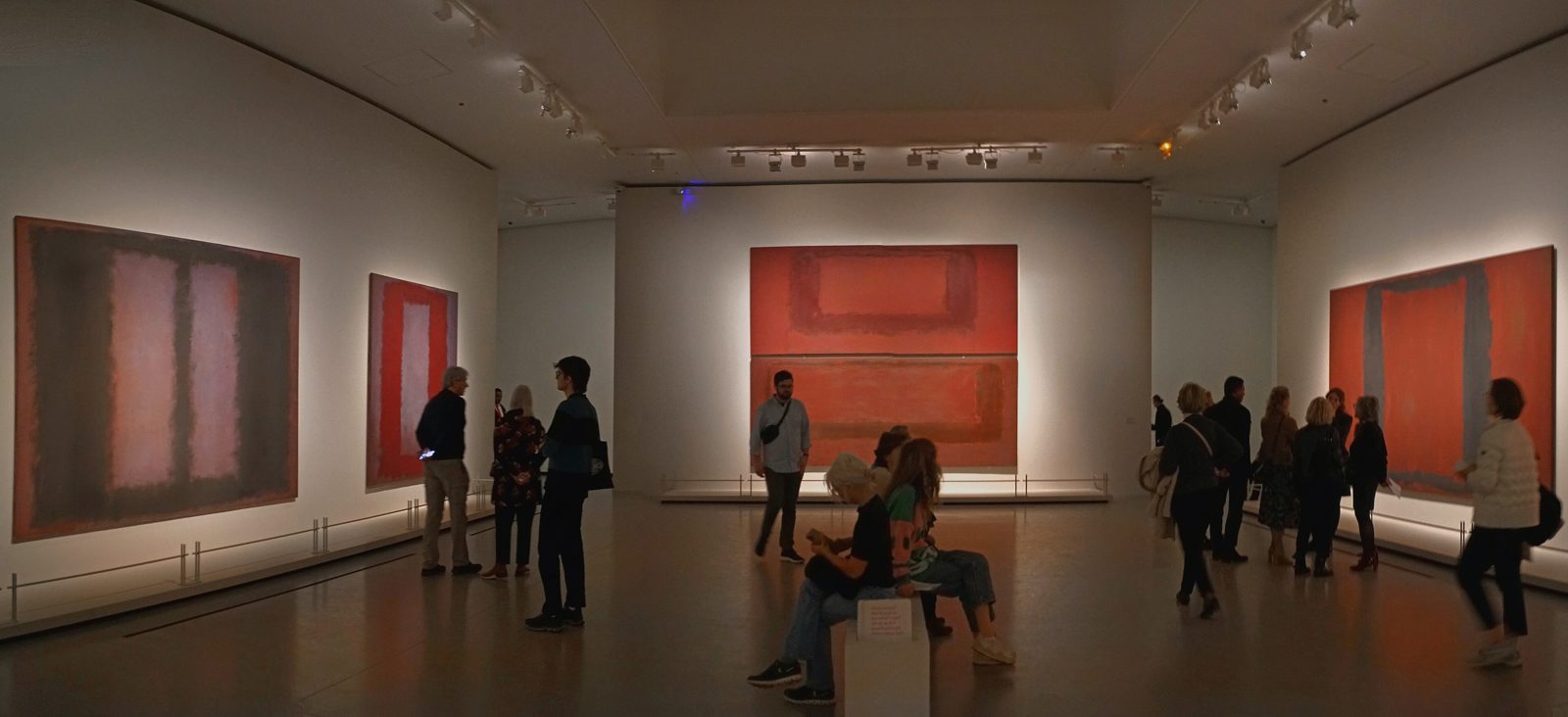
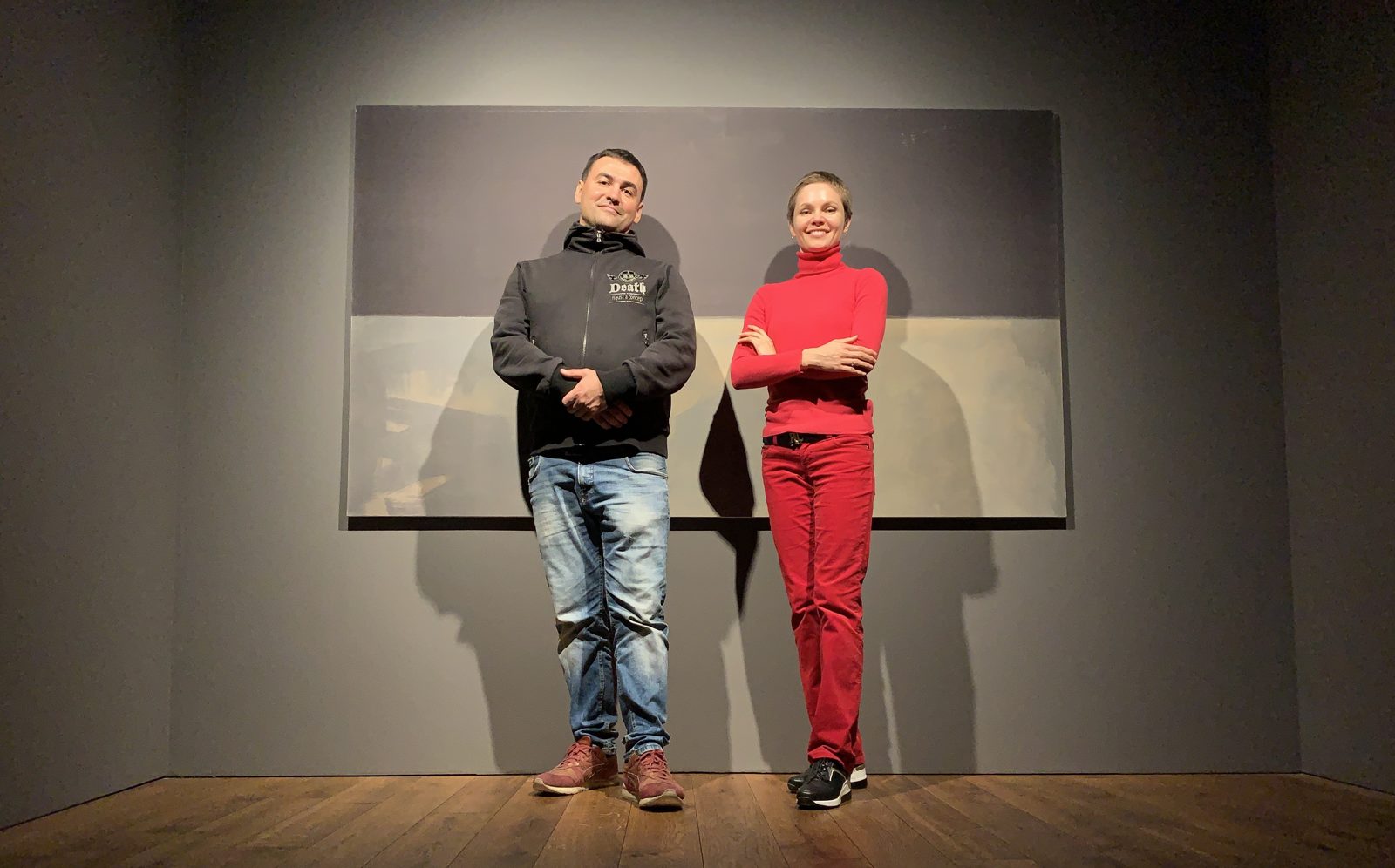
These are the murals that never reached the restaurant. Rothko painted them in 1958–59 in maroon, dark red and black, and he said he hoped to "ruin the appetite of every son of a bitch who ever eats in that room". Nobody’s appetite was ruined: the paintings went to museums instead. Nine of them belong to Tate, the gift I mentioned above, and in 2024 they travelled to Paris for the Rothko exhibition at the Fondation Louis Vuitton, where this photograph was taken. Today people queue to stand in front of them. No reservation needed, and no dinner served.
What will a Rothko cost tomorrow? Nobody knows. Not the auction houses, and not me. The man was the same in 1945 and in 2026. Only the market’s opinion of him changed.
Next stop: Daugavpils
If you are ever in Latvia, take the train to Daugavpils. And if you recognised the man in the compartment before reading this, write and tell me who should be next in this series.
Sources
- Rothko Museum, "Rothko. From the Family Collection": rothkomuseum.com/en/ekspozicija/rothko-from-the-family-collection/
- TheValue, "Former MoMA president’s US$98.4m canvas is now the most expensive Rothko ever sold at auction" (20 May 2026): en.thevalue.com/articles/mark-rothko-auction-record-christies-new-york-agnes-gund-collection-spring-sales-2026
- HENI News, "Rothko’s Auction Record Jumps 13% With $98.39m Sale": heni.com/news/article/mark-rothko-no-15-two-greens-and-red-stripe-2026-05-18
- Tate Etc., "‘This man Turner, he learnt a lot from me’", Christopher Rothko, Kate Rothko Prizel and Simon Grant (15 January 2021): www.tate.org.uk/tate-etc/issue-51-spring-2021/mark-rothko-jmw-turner-conversation
- Brooklyn Museum, Consuelo Kanaga, "Mark Rothko" (82.65.367): www.brooklynmuseum.org/opencollection/objects/164685
- Brooklyn Museum, Consuelo Kanaga, "Mark Rothko" (82.65.453): www.brooklynmuseum.org/opencollection/objects/164835
- Wikipedia, "Mark Rothko": en.wikipedia.org/wiki/Mark_Rothko
- Wikipedia, "Mark Rothko Art Centre": en.wikipedia.org/wiki/Mark_Rothko_Art_Centre
- Wikipedia, "Seagram murals": en.wikipedia.org/wiki/Seagram_murals
- Photograph at Tate Britain: Jp1008, CC0: creativecommons.org/publicdomain/zero/1.0/
- Photograph at the Fondation Louis Vuitton: Jean-Pierre Dalbéra, CC BY 2.0: creativecommons.org/licenses/by/2.0/