

Pablo Picasso: fifteen paintings, two collectors and a $179 million record
Fifteen variations on Delacroix, two collectors and a $179 million record for Les femmes d'Alger
The fifth article of our series “Great artists” follows fifteen Picasso paintings from his studio to an American couple's collection and one of the loudest auctions in art history. It begins, as many good art stories do, with one artist looking at another artist's work.
Who was Pablo Picasso?
Pablo Picasso was a Spanish artist who became one of the central figures of modern art through a career spanning painting, sculpture, drawing, printmaking and ceramics. He was born in Málaga in 1881, spent much of his life in France and died in Mougins in 1973.
That is the tidy version. Picasso is harder to fit into one paragraph than most artists are to fit into one museum.
His father was a painter and teacher. Picasso studied art in Spain, visited Paris in 1900 and settled there in 1904. His early Blue and Rose periods gave way to the radical experiments that led, with Georges Braque, to Cubism. Later came sculpture, ceramics, portraits, political images and paintings made in conversation with earlier masters.
If you know only one Picasso, the next room can be a surprise. The artist who painted the monumental Guernica and the one who made playful ceramic plates were the same man. The subjects, materials and moods kept changing. The curiosity seems to have stayed.
What was Picasso famous for?
Picasso is famous for transforming how artists represented the visible world, particularly through Cubism, and for works such as Les Demoiselles d'Avignon and Guernica. He did not do this alone: Cubism grew through his close artistic exchange with Braque.
In a conventional portrait, the face usually stays in one position long enough for the artist to paint it. In a Cubist work, different views can meet on the same surface. A profile and a frontal view may belong to the same person. You can call it difficult, or you can spend a little more time looking. Both are legitimate first reactions.
Les Demoiselles d'Avignon, painted in 1907 and now in the collection of the Museum of Modern Art in New York, is a useful place to begin. Picasso was looking at Iberian and African art as well as European painting. The resulting picture still has the ability to interrupt a comfortable walk through a museum.
Thirty years later came Guernica, made for the Spanish pavilion at the 1937 Paris international exhibition after the bombing of the Basque town. Its scale and broken figures make it difficult to mistake for pleasant decoration. Dora Maar photographed Picasso as he worked, leaving a record of the painting's development.
Why did Picasso paint fifteen versions of the Women of Algiers?
Picasso painted the fifteen versions of Les femmes d'Alger between December 1954 and February 1955 in response to Eugène Delacroix's nineteenth-century painting of the same subject. He labeled his canvases from A to O. Version O, painted in February 1955, closed the series.
Delacroix's Women of Algiers in Their Apartment is in the Louvre. Picasso had a habit of turning his attention to earlier artists, looking hard and answering in his own language. Later he did something comparable with Velázquez's Las Meninas. He was not trying to persuade anyone that he was Delacroix or Velázquez. With a name like Picasso, I suspect he had enough to manage already.
Seen as a series, the fifteen paintings show an artist working through a problem rather than announcing that the first answer must also be the final one. Forms shift, figures move, colors and arrangements change. Version O gathers the theme into a dense, brightly colored composition.
I find it useful to look at the whole alphabet before looking at the auction result for its last letter. The price is one fact. The work behind it is another.
Who bought the fifteen Picassos?
New York collectors Victor and Sally Ganz bought the complete Women of Algiers series soon after it was finished and kept five of the fifteen paintings: versions C, H, K, M and O.
Buying fifteen Picassos at once is a distinctive way to solve the problem of choosing a favorite. It was also a substantial commitment. They bought the whole series from Galerie Louise Leiris in 1956 for about $212,500 and later sold the other ten.
Their story is important because the history of a painting does not end when the paint dries. It passes through studios, dealers' hands, collections, exhibitions and family estates. Each step may leave a bill, a catalogue, a photograph or a gap that someone has to investigate later.
Version C was sold in 1988. The other four retained versions appeared in the 1997 sale of the Ganz collection at Christie's in New York. Version O, then bought by another collector, would return to the same auction house eighteen years later.
What interests me here is not only that the Ganzes bought Picasso. They bought a group that made sense together. Afterward, the individual paintings went their separate ways, and each acquired a history of its own.
What is Picasso's auction record?
Picasso's auction record is $179,365,000 including fees for Les femmes d'Alger (Version O), sold at Christie's New York on 11 May 2015. The hammer fell at $160 million (The Art Newspaper); the final figure includes the buyer's premium.
The bidding lasted about eleven minutes, The Art Newspaper reported. In 1997 the same painting had sold at Christie's New York for approximately $31.9 million, including fees. Same painting, two public sales, eighteen years apart.
Another prominent Picasso sale came on 8 November 2023, when Femme à la montre sold at Sotheby's New York for about $139.4 million including fees. The 1932 portrait came from Emily Fisher Landau's collection. It was a Sotheby's sale; Version O was sold by Christie's. Auction houses, like the paintings themselves, deserve to be identified correctly.
These are past public results, not a price list for everything Picasso touched. A major oil, a drawing, a ceramic and a print are different objects, even when the signature looks familiar. Condition, date, medium, subject, provenance and the particular work's place in the artist's career all matter.
And when a result is quoted, check the arithmetic: hammer price and price with fees are different numbers. One sounds less impressive in a headline. Both belong in the story.
What are five surprising facts about Picasso?
Five details show how far Picasso's interests traveled beyond the image of a painter standing at an easel:
1. He held a banquet for another artist. In 1908 Picasso organized a gathering in Paris for Henri Rousseau, after buying a painting by him. The guests included artists and writers from his circle.
2. He briefly turned to writing. In 1935, Picasso stopped painting for a period and began writing, particularly poetry, according to the Musée Picasso Paris chronology.
3. He worked for the theater. His projects included stage and costume design for ballet. An artist known for changing the look of painting was interested in what happened when figures actually moved.
4. A photographer documented a painting as it developed. Dora Maar photographed Guernica during its creation in 1937. The images allow us to look at decisions that disappeared beneath later layers of paint.
5. He returned to other artists' pictures. Delacroix's women became fifteen Picassos; Velázquez's Las Meninas prompted another series. A museum visit could become the beginning of a very long conversation.
None of this makes him easier to summarize. I think that is a good reason to keep looking.
Where can you see Picasso's work?
You can see major Picasso collections and individual works in Paris, Barcelona, Madrid and New York. Museums change displays and lend works, so check the current presentation before making a special trip.
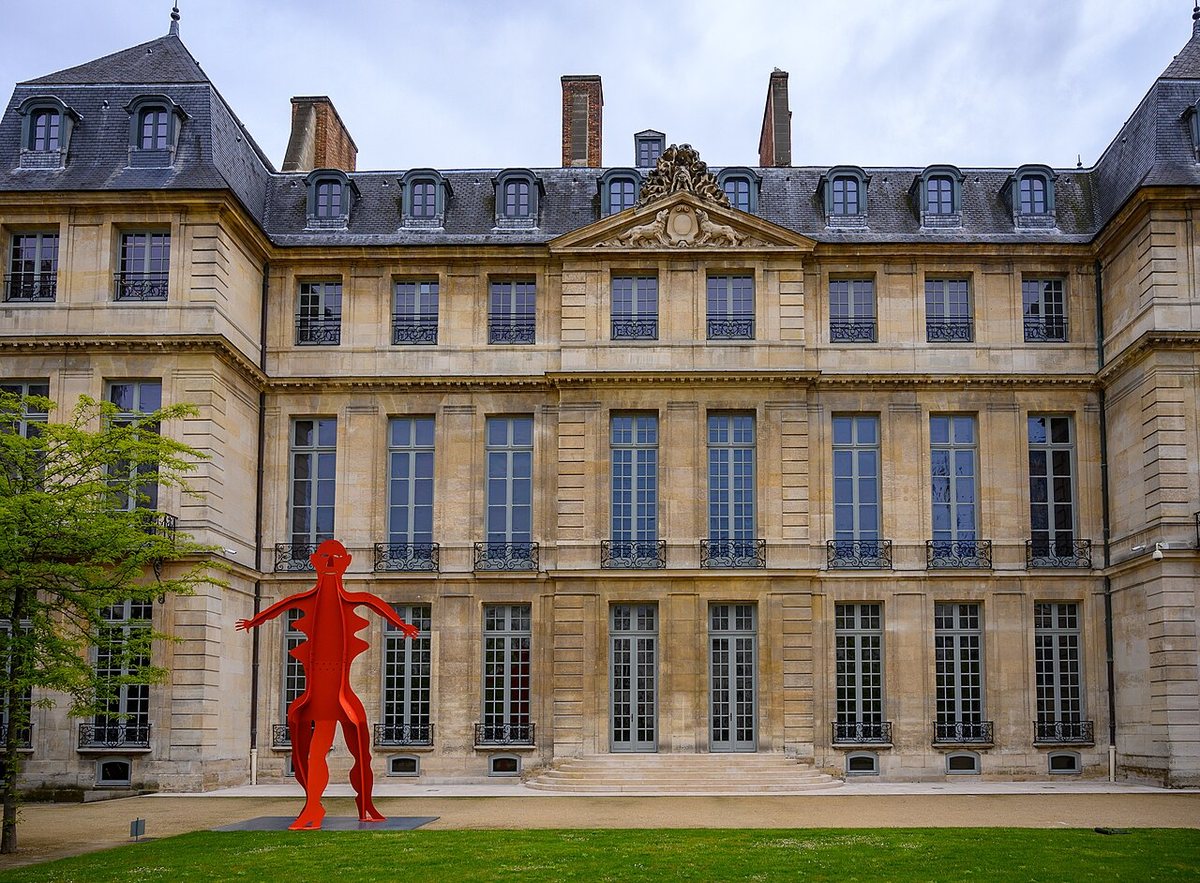
Musée national Picasso-Paris holds a wide-ranging collection covering different periods and media.
Museu Picasso, Barcelona is particularly valuable for understanding his early development and holds his Las Meninas series.
Museo Reina Sofía, Madrid houses Guernica. The painting came to Spain in 1981 after a long period in New York.
The Museum of Modern Art, New York holds Les Demoiselles d'Avignon and many other works by the artist.
The distance between Barcelona's early works and Guernica in Madrid is more than a train journey. It is also a way to see how much one artist changed without changing his name.
Why do Picasso's paintings matter to the art market?
Picasso matters to the art market because his long, influential career produced many different kinds of work, while the strongest paintings connect individual objects to major moments in modern art. A famous signature attracts attention, but it cannot tell the full story of any one work.
The Ganz collection also shows how important documented ownership can be. A painting may stay in a private home for decades and then return to public view through an exhibition or sale. Its earlier history needs to come with it: who owned it, where it was shown and how it changed hands.
At CoArt Market, we want objects that have spent years in private collections to be seen again. Each object receives a cryptographic certificate of authenticity that records its path from owner to owner on the platform. I want the market to be easier to enter and navigate for people beginning to collect, experienced professionals and established collectors alike.
Picasso took another artist's subject and made fifteen versions before he was done. The Ganzes bought all fifteen before choosing which to keep. If you could spend an afternoon with the complete series, which version would you take home in your memory?
Sources
- Musée national Picasso-Paris, Picasso timeline: www.museepicassoparis.fr/en/picasso-biography/timeline/
- Guggenheim, Picasso biography: web.guggenheim.org/exhibitions/picasso/biography
- Christie's, Les femmes d'Alger (Version F), catalogue and history of the series: www.christies.com/en/lot/lot-6269987
- Wikipedia, Les Femmes d'Alger (the Ganz purchase and the five versions kept): en.wikipedia.org/wiki/Les_Femmes_d%27Alger
- Christie's, 2015 sale results, Version O: press.christies.com/results-looking-forward-to-the-past-evening-sale?lang=eng
- Christie's, 2015 sale report: press.christies.com/post-sale-looking-forward-to-the-past-christies-curated-evening-sale-of-impressionist-modern-and-contemporary-art-achieves-us705858000/
- The Art Newspaper, Christie's breaks the record again (2015 hammer price and bidding): www.theartnewspaper.com/2015/05/12/christies-breaks-the-record-again
- Sotheby's, 2023 sale of Femme à la montre: www.sothebys.com/en/articles/new-york-sales-november-2023-results
- Museo Reina Sofía, Guernica: www.museoreinasofia.es/en/collections/artwork/guernica-0/
- Museo Reina Sofía, Dora Maar photographs and Guernica: guernica.museoreinasofia.es/gigapixel/en/?map1=VIS