

Salvador Dalí: a poet, a portrait and the woman who changed his life
A poet, his portrait and Gala: the poet's wife who became the woman of Dalí's life
The seventh article of our series “Great artists” begins in Cadaqués in the summer of 1929, when a poet and his wife visited a young painter. By the end of the story, there was a remarkable portrait, a new relationship and, decades later, an auction record.
Who was Salvador Dalí?
Salvador Dalí was a Spanish artist associated with Surrealism, known for technically precise paintings of strange, dreamlike scenes and for an equally memorable public persona. He was born in Figueres in Catalonia in 1904 and died there in 1989.
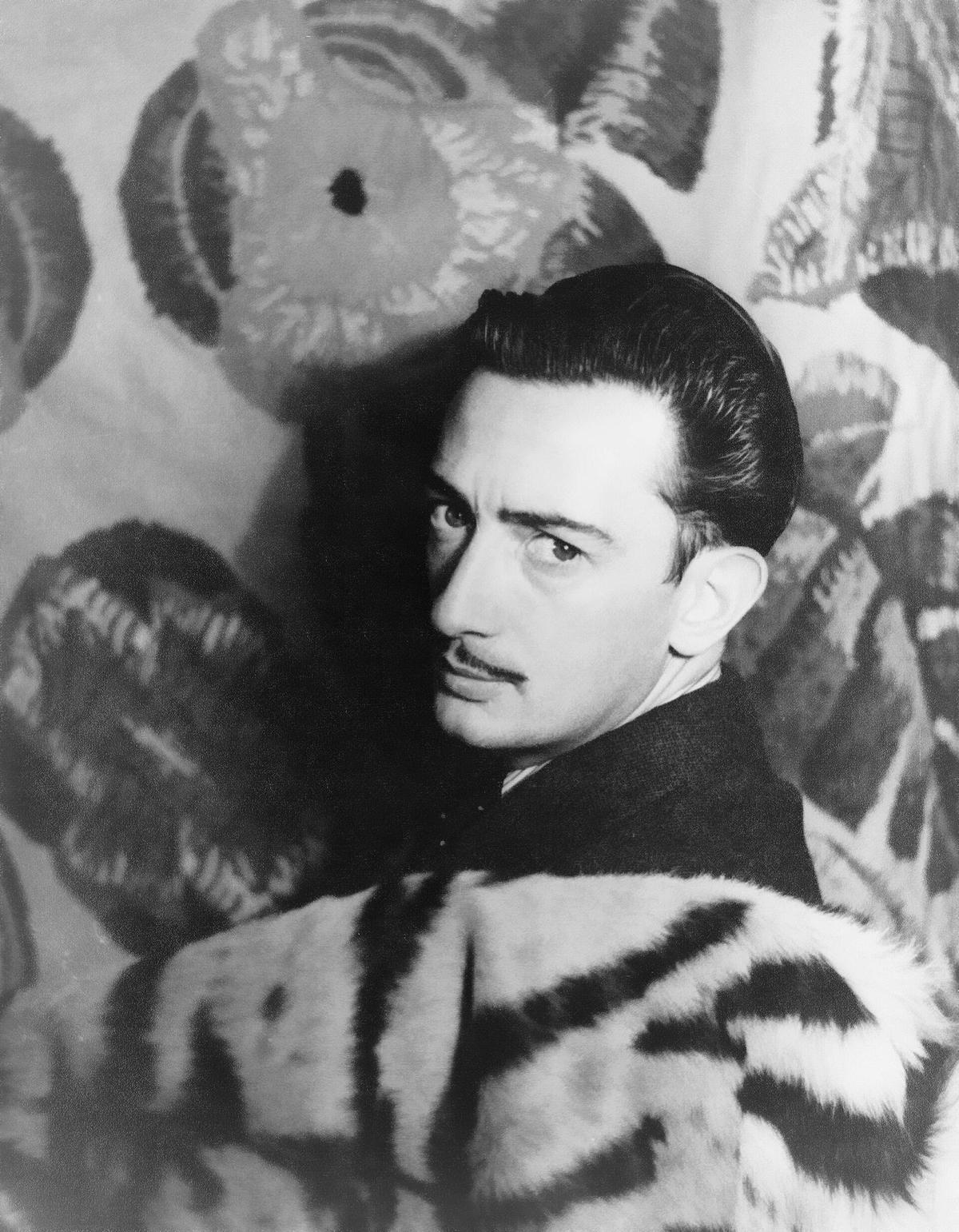
The moustache is familiar even to people who have never entered a museum. So are the melting watches. They can make Dalí seem easy to recognize and therefore easy to explain. I would not be so sure.
He studied art in Madrid, worked with filmmaker Luis Buñuel, joined the Surrealist circle in Paris in 1929 and made paintings that combine meticulous detail with images that resist a neat explanation. He later worked across film, design, theater and other media. There was also Gala, the woman who became his partner and played a central role in his professional life.
Dalí understood how to command attention. But looking only at the performance is like examining the frame and forgetting the painting. Step closer and the craftsmanship is impossible to miss.
What is Salvador Dalí famous for?
Dalí is famous for Surrealist images that place familiar objects in unexpected situations, especially the soft watches in The Persistence of Memory. Painted in 1931, the picture belongs to the Museum of Modern Art in New York.
The landscape looks quiet. The watches do not behave as watches should. One hangs over a branch; another rests on a soft form. Dalí painted the details with care, which makes the impossible scene feel strangely convincing.
If you have seen the image only on a screen, its size may surprise you. It is a small painting, about 24 by 33 centimeters. I mention this because fame has a way of changing the imagined dimensions of an object. A picture can fill a century and still fit on a modest wall.
The cliffs in the background relate to the Catalan coast, a landscape Dalí knew. Dreams, in his work, do not always require an invented planet. Sometimes they start with a place the artist has looked at all his life and a watch that has stopped respecting its job description.
The painting entered MoMA's collection in 1934, only a few years after it was made, as an anonymous gift. Its route from studio to museum was considerably shorter than the journey of the portrait we are about to follow.
What happened in Cadaqués in 1929?
In the summer of 1929, Dalí welcomed a group of visitors to Cadaqués that included the French poet Paul Éluard, his wife Gala and their daughter Cécile. René Magritte and Luis Buñuel were also among the visitors, according to Sotheby's catalogue.
The invitation might have made an interesting group photograph. It changed Dalí's life as well. During the visit he and Gala grew close. She would become his partner and later his wife, while remaining an important figure in his artistic and professional world.
Gala, born Elena Diakonova, had a life and relationships before meeting Dalí. The Gala-Salvador Dalí Foundation describes her as more than a passive muse: she helped organize and sustain the conditions in which he worked. That distinction matters. Art history has a habit of placing a woman beside a famous man and allowing her one word of description.
And Éluard? He was not just a name in someone else's love story. He was a major Surrealist poet and an important figure in the artistic circle Dalí had recently entered. Dalí painted him in that same decisive year.
What makes Portrait de Paul Éluard important?
Portrait de Paul Éluard, painted in 1929, brings together Dalí's developing Surrealist language and a relationship at a turning point in his life. Rather than giving us a straightforward likeness, the artist places the poet's features within an unsettling landscape of forms and details.
Sotheby's catalogue traces the work to that summer and to Dalí's first exhibition at Galerie Goemans in Paris, in November and December 1929. The painting was there when his public recognition was beginning to grow. This gives it a useful position in the story: it is not a late repetition of an established formula but a work made as an artistic world was opening around him.
It is also a portrait with more than one person in its history. Éluard is the subject. Dalí is the painter. Gala is not simply a name to insert for dramatic effect: all three occupied the same small circle at a moment when their relationships were changing. The painting stayed with Salvador and Gala Dalí, passed to Éluard's daughter Cécile around 1982, and was sold at Christie's New York in 1989 to the owner who consigned it in 2011.
A portrait can record a face. Sometimes it records a particular arrangement of lives just before that arrangement changes. This is the aspect that interests me most.
What is Salvador Dalí's auction record?
Dalí's auction record is £13,481,250 including fees, about $21.7 million, for Portrait de Paul Éluard, sold at Sotheby's London on 10 February 2011 in the "Looking Closely" sale. The estimate was £3.5–5 million, and the result was reported at the time as a world record for a Surrealist painting.
The auction catalogue identifies the painting, the date and the sale. The artist's name alone did not carry the story: the subject, the year, the early exhibition history and the painting's documented path all mattered to how the market understood it.
It is worth distinguishing a record for an original painting from the much wider market in works connected with Dalí. There are paintings, drawings, prints, editions and objects in different media. They do not become interchangeable because a moustache or a signature appears nearby.
A public auction result gives us a real transaction to study. It does not tell us what every work by the same artist should cost. For that, we need to look at the object itself, the medium, the edition where relevant, condition and the documented history of ownership.
I find the record portrait an unusually good example of why a work's story matters. It belongs to a precise moment in Dalí's development, and its sitter mattered to the movement as well as to the painter's personal life. Take any of those details away and the picture is still there. Our understanding of it is smaller.
What are five surprising facts about Dalí?
Five details take us beyond the famous moustache:
1. The melting clocks are in a small painting. The Persistence of Memory has an enormous reputation and measures about 24 by 33 centimeters.
2. A famous coast became an unlikely dream landscape. The Catalan surroundings Dalí knew appear transformed in his Surrealist scenes.
3. The artist and a filmmaker worked together. Dalí collaborated with Luis Buñuel on Un Chien Andalou, connecting his visual imagination with cinema.
4. Gala was a working partner. The Gala-Salvador Dalí Foundation describes her role as extending well beyond the conventional label of muse.
5. The record portrait has a poet as its subject. Paul Éluard was one of the leading writers in the Surrealist circle, and the portrait was made in the year he and Gala visited Dalí. It is a small painting too: 33 by 25 centimeters, on board.
You do not need to solve every symbol before looking. In fact, a little uncertainty may be the most appropriate way to begin.
Where can you see Dalí's work?
You can see major Dalí works in Figueres, New York and other cities, including the three sites run by the Gala-Salvador Dalí Foundation in Catalonia. Check the museums' current displays and opening arrangements before traveling.
Dalí Theatre-Museum, Figueres brings together a wide range of the artist's work in a setting closely connected with his own vision.
Salvador Dalí House, Portlligat gives visitors a view of the place where Dalí lived and worked.
Gala Dalí Castle, Púbol offers another perspective on Gala and the couple's life.
The Museum of Modern Art, New York holds The Persistence of Memory.
The Dalí Museum, St. Petersburg, Florida presents another major collection of his work.
A museum collection and a work currently on display are not always the same thing. It is worth checking before traveling across an ocean to meet a very small painting.
Why does a Dalí object's history matter?
A Dalí object's history matters because its medium, creation, edition and ownership help explain exactly what a buyer or museum is looking at. His work circulated in many forms, and a painting, a print and an object each ask different questions.
The portrait of Éluard carries its story from Dalí's circle in 1929 to an auction room in 2011. Much of what makes that journey meaningful comes from catalogues, exhibition records and the people who kept them. A good story becomes much stronger when its dates and owners can be checked.
At CoArt Market, we want objects that have spent years in private hands to become visible again. Each object receives a cryptographic certificate of authenticity that records its path from owner to owner on the platform. We want people beginning to collect, professionals and established collectors to be able to participate in the same market.
Dalí painted a world in which watches can soften and a portrait can hold the beginning of several new lives. If you had an hour with one Dalí work, would you choose the melting clocks or the poet's portrait?
Sources
- Gala-Salvador Dalí Foundation, Dalí's painting and Surrealism: www.salvador-dali.org/en/dali-and-gala/dali-the-total-artist/painting/
- Gala-Salvador Dalí Foundation, Gala, the visible woman: www.salvador-dali.org/en/dali-and-gala/gala/the-visible-woman/
- Sotheby's, Portrait de Paul Éluard, Looking Closely, London, 2011: catalogue note, provenance and exhibition history: www.sothebys.com/en/auctions/ecatalogue/2011/looking-closely-l11001/lot.7.html
- Catalan News, Dalí has a record-breaking week at London auction houses (11 February 2011): catalannews.com/culture/item/the-catalan-surrealist-painter-salvador-dali-has-a-record-breaking-week-at-london-auction-houses
- HENI, Portrait de Paul Éluard, Sotheby's London, 10 February 2011: heni.com/news/article/salvador-dali-portrait-de-paul-eluard-2011-02-10
- MoMA, The Persistence of Memory: www.moma.org/collection/works/79018